
Home » 2009 (Page 3)
Yearly Archives: 2009
Toward a Postliberal Catholicism :: Robert Barron
In my class at Southern Baptist Theological Seminary on Contemporary Theology, Dr. Wellum taught us that the Postliberal approach to theology, while trying to overcome the flaws of Classic Liberal Theology, unwittingly falls into the same “trap” of Liberal starting points and thus still basically undermines biblical authority. However, Father Barron’s critique of Classic Liberal Theology is much the same as Wellum’s. It is difficult to see exactly how Barron’s approach fits the critique of Dr. Wellum. Barron appears to accept the full weight of biblical authority in his quest for a Postliberal theology.
Robert Barron, The Priority of Christ: Toward a Postliberal Catholicism. Grand Rapids, Michigan: Brazos Press, 2007.

Barron’s argument for the epistemic priority of Jesus Christ consists largely in his claim that the characteristically modern approaches he considers in his book are inconsistent with what Paul says in Colossians 1:16,17: “in him all things in heaven and on earth were created … in him all things hold together” (133). For Barron, the implication of this verse has an epistemic dimension: “Jesus cannot be measured by a criterion outside of himself or viewed from a perspective higher than himself … as one object among many” (135). This argument seems to be his starting point for the development of all subsequent arguments in his book. It appears to carry the most weight because it virtually accuses all distinctly modern approaches of being impious—replacing the centrality of Christ with something else. I will refer to this aspect of his argument as “the charge of epistemic impiety.” This argument contains the theme after which his book is named—the “priority” of Christ turns out to be an “epistemic priority” (136).
A good example of how this argument plays out can be found in Barron’s critique of the method of knowing exemplified by Descartes. Rather than building his knowledge of the objective world based upon the epistemic ultimacy of Christ, Descartes built his knowledge upon the authority of the cogito, and thereby (according to Barron) “brought all claims to knowledge before the bar of the self-validating ego for adjudication” (137). This is not a mere intellectual mistake, as Barron’s charge of epistemic impiety implies, for in this way of knowing, “the subject’s humility in the presence of the perfect reality seems a bit strained, a false piety” (137). This argument carries more ethical weight because it goes beyond his arguments about the incoherency of foundationalism—that is, its incompatibility with itself and naïve presumption of neutrality (141). Barron’s criticism of Tillich is very similar. Although it might seem that the dialectic nature of Tillich’s method of correlation protects it from the charge of epistemic impiety since prima fascia it holds the two ends of the dialogue in a tension of equality, in the end, “it is still Christ who is fitted to the subject” because the subject is the one who “shapes the conversation” (143). Furthermore, because of the “debilitas of the human mind” (151), we tend to ask the wrong questions anyway (144).
My Friend G … a.k.a. Seven
My friend Gerald (G) has been at work in the studio (hip-hop). Here’s what he came up with: http://www.myspace.com/464038426
The Identity of the Suffering Servant in Isaiah
Ever wonder what the mainstream scholars (read: liberal scholars) make of prophecies about Jesus in the Old Testament? The following is a summary of John Collins’ answer to the Question of the Identity of the Suffering Servant. NOTICE: Collins does not think Isaiah wrote everything that went into the book we now know as “Isaiah.” This is reflected by the language of “Second Isaiah” or “Third Isaiah.” These are different hypothetical authors for distinct passages in Isaiah.
NOTICE: The answers below do not necessarily represent my own views, but are an exact representation of Collins’ views as expressed in his book.
John J. Collins, Introduction to the Hebrew Bible. Minneapolis MN: Augsburg Fortress, 2004.
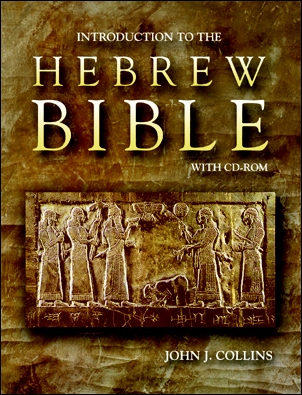
Who is “The Servant” in Second Isaiah?
The figure of “the servant of the Lord” is one of the “best known features of the prophecy of Second Isaiah” and “an integral part of the prophecy of Second Isaiah” (385-86). “The servant in question has been variously identified as a collective figure” in which case Israel is thought to be in view, “or as in individual” in which case the most widely supported are 1) Moses, 2) Cyrus, and 3) the prophet himself (386). “The evidence of the book as a whole, [however], indicates that the servant is usually Israel” (386) since Jacob is explicitly called “my servant” in several of the Second Isianic oracles (41:8; 44:1-2; 44:21; 45:4) and Israel is called “my servant” also (41:8). “The explanation [for the depictions of the servant as an individual] that requires least hypothetical speculation is that the servant is Israel, described metaphorically as in individual”—the ideal Israel that “acts as a leader toward the rest of the people [of Israel]” and as a “light to the nations” (337-38).
How is the Suffering Servant Described?
Using the categories of Bernard Duhm who divided the servant strands into four “Servant Songs,” (385) the fourth Servant Song (52:13—53:12), which speaks of The Suffering Servant, is the longest and most famous of the Isianic Servant passages (387). In the beginning of the unit, the servant is introduced as one who was “deformed beyond recognition” but is later “restored and exalted to the astonishment of kings” (387).
Who is Doing the Describing?
In the latter part of the unit, the speaking is done by a collective group (“He was wounded for our transgressions; he was crushed for our iniquities.” [53:5]). “If the servant is thought to be an individual, this group could be the Jewish community. If the servant is Israel, the speakers are the kings, whose astonishment is noted at the end of chapter 52” (387).
Could The Suffering Servant be an individual historical figure?
Since later we are told the servant actually dies before being restored—he is “cut off from the land of the living, stricken for the transgression of my people” (53:8)—“he can hardly be the prophet himself” (387). In fact, any attempt to interpret the servant as in individual historical figure known to the author(s) forces the interpreter to reconstruct an entirely hypothetical figure “for whom we have no other information” who, in some sense (how?) died “for the sins of my people” (388).
In What Sense Does The Servant Suffer?
Regardless of whether one identifies The Suffering Servant as an individual of collective group, one thing remains clear: His life is made an offering for sin. This is vicarious suffering: “the idea that the sufferings of one person or people can atone for the sin of another” (388). There are other places in the Bible where such an idea is found. The scapegoat in Leviticus 16 is said to bear the people’s sins and carry them into the wilderness. “A closer analogy” is Ezekiel who bears the punishment of “the house of Israel” when he is told to lie on his left side for 390 days, a number “equal to the number of the years of their punishment” (Ezek 4:4-5). He is forced to eat food cooked over human dung for the allotted time (Ezek 4:12). In this case, the efficacy of the vicarious punishment was contingent upon the response of the people for whom it was performed. Something similar takes place in the case of The Isianic Suffering Servant: the onlooker’s astonishment at the restoration of The Servant ultimately leads to their conversion.
In what sense, then, would “Israel” fit the descriptions of sacrificial suffering, death, and subsequent restoration?
“In the exile, Israel was deformed beyond recognition, and might even be said to have died (cf. Ezekiel’s vision of a valley full of dry bones). In this case the people whose iniquities he bore are the other nations. On this explanation Second Isaiah breaks radically with earlier tradition by explaining the exile not as punishment for the sin of Israel, but as vicarious punishment for the sins of other peoples” (388). While the passage that says “he shall see his offspring and prolong his days” is problematic for an individual interpretation since “there is no hint of individual resurrection anywhere else in Second Isaiah,” if one interprets the Servant as Israel “this is less of a problem” (388). “The purpose of the exile, then, was to get the attention of the nations”—especially the kings—“so that they would become aware of YHWH and be astonished by the sudden revelation of his power. Israel was like a sacrificial victim … By obediently going along with the divine plan, Israel makes righteous the many people who observe what happened. No one is automatically saved … but it creates an opportunity for people to recognize their true situation and convert accordingly” (388). The reason why there is no admission of any sin on the part of the servant is because he is “idealized, and may not be identical with the entire people” (388).
What about Jesus as The Suffering Servant?
“The idea that suffering in this life can lead to exaltation hereafter gains currency in [Daniel,] the Dead Sea Scrolls and other literature around the turn of the era. This idea would be crucial to the understanding of the death of Jesus in early Christianity. Isaiah 53 is read in the traditional liturgy of Good Friday” (389).
Feminist Theology is Alive and Well: A Critique of Johnson’s Book “She Who Is”
Elizabeth A. Johnson, She Who Is: The Mystery of God in Feminist Theological Discourse. New York, NY: Crossroad Publishing, 1999.
Feminist theology is not dead. Although Johnson’s book was written a long time ago, her arguments for a feminist reform have been well received over the years and still stand as perhaps the most reasonably argued feminist position available for Catholics. Compared to other feminist reform proposals, her project is very modest. Her ideas have had plenty of time to percolate the church and the Catholic authorities have not taken any disciplinary action against her. In fact, she was invited recently to The University of Dayton (a Catholic school that I presently attend) to give talks on her classic book (i.e. given a chance to promote her theology).
Apparently, whenever there is a new reform ideology floating around “out there” in the Catholic world of theology (especially those seen as having an influence—i.e. feminism), Roman Catholics like to ask the question whether such new ideology is ressourcement or aggiornamiento with respect to the Tradition (Catholics like to use big Latin words to describe relatively easy concepts, and I explain my understanding of them below). We must remember that for the Catholics this includes Scripture because it was the Tradition—not scripture itself—that delineated and codified the canon.
NOTE: From here on out I will not capitalize “tradition,” but I mean to refer to the broad theological tradition of the Roman Catholic Church.
Perhaps because I am not cognizant of the technical ways in which these terms are understood by Catholic theologians, ressourcement and aggiornamiento appear to me to be greatly overlapping categories. For the sake of my present thoughts, however, I will assume that ressourcement involves—at least to some degree—the replacement of the “old” interpretation with a “new” one, in which case the old paradigm must be undermined to give way to the new. For the sake of my present thoughts I will also assume aggiornamiento to be less threatening to the “old” way of interpreting the tradition by understanding it more like a further enlightenment of the implications of the old.
I will now seek to give an answer to the question of whether Elizabeth Johnson’s book She Who Is (see publication info above) is ressourcement or aggiornamiento according to a Catholic model of authority. I will conclude that certain aspects of Johnson’s project can be seen by Catholics as a harmless enlightenment that advances the existing tradition (aggiornamiento), while other aspects of her proposal appear to undermine aspects of that tradition and could therefore be considered a reinterpretation (ressourcement).
Areas of Johnson’s Project Compatible with Catholic Tradition
At times Johnson appears to understand herself as engaging only in an attempt to balance out the traditional male imagery of God with an equal amount of female imagery that helps plunge the depths of the divine mystery—which would appear to be simply a way of adding more wisdom to the existing tradition (aggiornamiento). For example, consistent with the tradition she understands that gender language about God is only metaphorical—not literal (5-6). God is not a male.
NOTE: She doesn’t like the irony of saying “He is not male,” which language she believes undermines the point! She prefers “Godself” to “Himself.”
Along with tradition she admits that metaphors (and all language about God) can never fully exhaust the mystery of the divine reality and therefore all language is inadequate (7). She hopes to make the tradition a land of plenty for feminists who are turned off to it, “consolidating” its gains (12). A good example of such consolidation is Johnson’s application of Irenaeus’s axiom Gloria Dei vivens homo (the Glory of God is the flourishing of humankind) to the female gender (14). In this case, she simply applies tradition in a new direction without undermining it.
She explicitly delineates her aim in terms of “a new interpretation of the tradition” (18) and a “hermeneutical retrieval” of ancient texts (which I assume includes scripture as well as extrabiblical tradition). While anxious to correct sexism she nevertheless does not take this to the extreme of denying all differences between men and women (32). The most important distinction she makes is this: she is not advocating a negation of male imagery (which is used in the tradition) but only pleading that such imagery not be understood literally or used exclusively (to the marginalization of female imagery) or patriarchally (33).
The male metaphors are to be understood as designating relationships, not essence (34). She is not abandoning, for example, the Chalcedonian formulation, only correcting it against the abuse of arbitrarily transferring Jesus’ human gender to the his divine person when none of the other historical particularities of his human nature are considered transferable (35). Her female imagery is often drawn from scripture itself (e.g. the housekeeper’s lost coin in Luke 15:4-10 [56]). She does not ignore or deny, for example, scriptures metaphor for God as Father (80-81). She does justice to proper theological distinctions between God’s presence and essence in male depictions of YHWH (106).
Johnson’s continued emphasis on paternal symbols as analogous of function and “not an ontological claim,” fits with the existing tradition—aggiornamiento (173). Likewise, her persistent criticism of Aquinas’ anthropology continues also to be a fair corrective (Aquinas thought females were inferior to males, 174). When she complains that the pneumotology of the Nicene Creed “did not receive attention commensurate with [its] confession,” her lament, I take it, could be shared by the most conservative of Catholics and is certainly no threat to the tradition (128). Just the opposite, her critical energy here is an aspiration to live up to this tradition. Her observation that Mary has stolen the spotlight from the Holy Spirit is fitting with the tradition also, which, though affirming that the Holy Spirit is God and Mary merely mortal, tends to let Mary wear all the outfits from the Holy Spirit’s wardrobe (129). This critique is sure to find resonance with Protestants such as myself who share similar concerns. At these junctures, Johnson’s critiques are inbounds and no one should pull the plug on her venture.
Aspects of Johnson’s Project That Undermine Catholic Authority
On the other hand, Johnson at times appears to be undermining the tradition—in which case her project appears to overlap with ressourcement.
For example, she understands herself to be promoting an entire shift in total world view (6, 28) in which the Christian’s traditional use of divine imagery is “deconstructed” and heavily criticized (29). She is against the use of certain male images that (as inconvenient as it is for Johnson) are actually prevalent in the Christian tradition—God as the absolute king of the world, for example—decrying these images as inherently perverted even when understood in benevolent terms rather than tyrannical terms (20, 34, 36).
Contrary to Catholic tradition that saw Jesus as playing subordinate roles to the Father while still being equal in essence and glory, Johnson also understands roles of subordination to imply inferiority (23, 25). What does that say about Jesus? Furthermore, since Jesus used almost exclusively masculine language for God (which is oppressive in Johnson’s view), it raises the question: “Did Jesus accommodate himself to a sinful and oppressive way of speaking about God?” The implications of her ideology have dangerous implications here.
The tension between these two aspects of her project—undermining the tradition while at the same time attempting to cast her project as one that strengthens that same tradition—cannot be easily resolved.
If the tradition excludes women from certain responsibilities in the church, such as priesthood and bishopric, Johnson’s evaluation at places undermines this tradition and (therefore) proposes what we might call a censorious denunciation (or “reinterpretation,” if you prefer to be less candid) of the tradition (122). To depict the state of affairs more starkly: If her concept of “flourishing” includes women flourishing in these roles for which they have so far been forbidden by the tradition, she is accusing the Catholic church of blasphemy (168)!
Ironically, while she claims that “the crucified Jesus embodies the exact opposite of the patriarchal ideal of the powerful man,” she seems to turn a blind eye to the fact that the Sophia-inspired text of scripture (Sophia is Johnson’s favorite name for God) teaches that Jesus endured the suffering of the cross in order to purchase a people for his own possession (Titus 2:14) and, upon rising, take his seat at the right hand of God (Heb 12:2)—the place of kingly power that Johnson hopes the image of the crucified Christ will eradicate (161)!
Conclusion: Johnson = Typical Modern Theology
Johnson wants to accept parts of the tradition that conveniently fit her feminist agenda and vehemently reject those that create problems for her agenda—even if they are at the heart of the gospel itself (not to mention the broader tradition). This fits the postliberal complaint to a tee (that modern theology wrongly tries to redefine God in keeping with their modern sensibilities, redefining everything to fit their agenda). The real question is: Is anyone really surprised?
Feminine God Imagery in Early Syrian Christianity
The following is a surprising excerpt concerning the development of early Christianity from History of the World Christian Movement, Vol I: Earliest Christianity to 1453 by Dale T. Irvin and Scott W. Sunquist (Maryknoll, New York: Orbis Books, 2001), 63-64.
After reading this excerpt, leave your thoughts in the comment section: What do you think about the use of Feminine Imagery for the Father, Christ, and the Holy Spirit?
Another distinctive feature in Syriac Christian literature concerns the positive use of feminine images in liturgy and theology. Often Syriac writers employed images of the Spirit as woman, reflecting a theological inclusiveness in gender that has contributed to contemporary discussions of trinitarian language. An early Syriac eucharistic liturgy calls upon God as both Father and Mother to descend upon the elements being shared. The Syrian tradition sometimes provided strong feminine imagery for both Christ and the Holy Spirit.
It was not uncommon in the early Christian movement for newly baptized persons to be fed milk and honey as a sign of their crossing the Jordan River. The Odes of Solomon, a collection of Christian hymns from the end of the first or very early second century, extends that image in a strongly feminine direction to encompass all three divine figures in Christian worship. The Son is a cup of sweet milk, the book tells us, while the Father is he who was milked, and the Holy Spirit she who milked him. In another place the Odes contain a hymn of Christ that suggests Christ is the one who feeds us. Christ says:
I fashioned their members
And my own breasts I prepared for them,
That they might drink my holy milk and live by it. (1)
————————–
(1) The Odes of Solomon, trans. James H. Charlesworth (Oxford: Clarendon Press, 1973), 42.
Is Enjoyment of Torture Wrong? :: Problems in Ethics
Is it “wrong” or “bad” to enjoy torturing other people? Listen to a philosopher try to convince a reader that there is no such thing as a wrong desire, only we call things “wrong” or “bad” when they have consequences that we don’t prefer. This would mean that a desire to torture people or an enjoyment at the thought of people being tortured is not necessarily “bad” or “wrong.” In a word, this is the philosophical insanity that a godless theory of ethics (i.e. pure utilitarianism) leads to.
Could a pleasurable state of mind have no intrinsic value at all, or perhaps even a negative intrinsic value? Are there pleasurable states of mind towards which we have an unfavourable attitude, even though we disregard their consequences? In order to decide this question let us imagine a universe consisting of one sentient being only, who falsely believes that there are other sentient beings and that they are undergoing exquisite torment.
So far from being distressed by the thought, he takes a great delight in these imagined sufferings. Is this better or worse than a universe containing no sentient being at all? Is it worse, again, than a universe containing only one sentient being with the same beliefs as before but who sorrows at the imagined tortures of his fellow creatures? I suggest, as against Moore, that the universe containing the deluded sadist is the preferable one.
… It is difficult, I admit, not to feel an immediate repugnance at the thought of the deluded sadist. … Our repugnance to the sadist arises, naturally enough because in our universe sadists invariably do harm. … language might make it difficult for us to distinguish an extrinsic distaste for sadism, founded on our distaste for the consequences of sadism, from an immediate distaste for sadism as such.
Normally when we call a thing “bad” we mean indifferently to express a dislike for it in itself or to express a dislike for what it leads to. … when a state of mind is always, or almost always, extrinsically bad, it is easy for us to confuse an extrinsic distaste for it with an intrinsic one. If we allow for this, it does not seem so absurd to hold that there are no pleasures which are intrinsically bad.
:::::::Source: J.J.C. Smart, “An Outline of a System of Utilitarian Ethics,” in Readings in the Problems of Ethics, ed. Rosalind Ekman (New York, New York: Charles Scribner’s Sons, 1965), 22-23.
 T h e o • p h i l o g u e