
Home » Uncategorized (Page 25)
Category Archives: Uncategorized
If Christians were more Christian ****
If Christians were more Christian they would keep love as their top priority, since that’s what Christ taught the will of God, the commands of God, and the kingdom of God were ultimately all about.
If evangelicalism were more evangelical ***
If evangelicalism were more evangelical, it would be more about the gospel (the evangel), and less about what divides those who sincerely believe in this one gospel, though they differ on many other issues.
(read, gospel = incarnation, death, burial and resurrection of Jesus Christ)
Racial Reconciliation … It’s Not Really About Race
Racial Reconciliation is not ultimately about race, but about love.
:: Fanaticism •r Biblical Spirituality? :: B••k Review
Unfortunately, I was required to read this book, A Pastor’s Sketches, in my evangelism class at Southern Seminary in Louisville, KY. The book is dangerous. A poor example of evangelism, a pastor who mistakes Calvinism for the gospel, and is out of touch with biblical spirituality. It concerns me that this book is required reading at Southern.
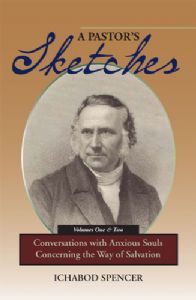
Spencer thinks we should be suspicious of someone’s coming to Christ in the midst of strong affections, for “when the affections take the lead, they will be very apt to monopolize the whole soul—judgment and conscience will be overpowered, or flung into the background” (175). He calls this kind of phenomenon “fanaticism” (175). Spencer believes that “the most clear perception of truth, the deepest conviction, is seldom accompanied by any great excitement of the sensibilities” (175). 9) It does not seem to be a good idea to Spencer, to present the doctrine of predestination at the outset to a sinner who still needs to learn repentance and faith (239).
Spencer here more than anywhere else demonstrates that he is out of touch with biblical spirituality. This brief post is not the place for a lengthy discussion of emotions and their role in the Christian life (I do a little of that here), but I will mention a few things in passing.
Part of conversion is the work of the Holy Spirit that causes the sinner to not only know they are sinful, but to feel contrition for their sin. This feeling I believe to be necessary for true conversion. When someone comes to Christ, it is not merely because they have understood doctrines, but it is because the Holy Spirit has wrought within them genuine affections for the person of Christ. They ought to be overwhelmed with affection for the Savior, having seen Him for who He truly is for the first time. How can such a vision not be attended with great excitement of the spirit of a man? Also, joy is an essential aspect in conversion (Matthew 13:44). Thus, we should expect strong affections to arise during conversion, and for the conversion of sinners to be accompanied by a “great excitement of the sensibilities.” Conversion affects the whole person, not just the mind. In fact, Spencer seems to be unconsciously aware of this reality, as he tells us he considers it part of his responsibility to impress truths, not merely on the mind, but on the “feelings” (52).
s i m p l e • g o s p e l ::: N.T. Wright & Martin Luther’s Gospel
Shot out to Nick Mitchell for showing us that N.T. Wright and Martin Luther both agree on the basic message of the gospel. How can this be? Because the core message of the gospel is simple, and does not involve (in either’s definition) the doctrine of justification.
Now that’s good news.
——————————–HT: Kingdom People———————————-
s i m p l e • g o s p e l ::: Eric L. Johnson’s Gospel
In the spirit of Trevin Wax’s helpful “gospel definition” posts, I offer Eric L. Johnson’s articulation of the simple gospel message from his impressive magnum opus Foundations for Soul Care:
The good news of the gospel is an articulation of the free gift of divine salvation and soul-healing, accomplished through Christ’s life, death and resurrection and offered to all who consent to it from the heart.
A few things are interesting about this definition. 1) it defines the gospel as “an articulation of” certain truths, 2) it includes what we would normally call sanctification in protestant lingo (“soul healing”), 3) rather than saying, “offered to all those who believe,” he spells out faith as “consent of the heart.” Very interesting.
Eric L. Johnson, Foundations for Soul Care: A Christian Psychology Proposal (Downers Grove, Illinois: IVP Academic, 2007), 33.
—————————–HT: Kingdom People——————————-
::: b l o g • s h o t ::: #3
Gerald Hiestand, pastor at Harvest Bible Chapel and President of the Society for the Advancement of Ecclesial Theology, calls men to the pastor-scholar paradigm.
Celucien L. Joseph appreciates Gregery Boyd’s thoughts on how racial reconciliation is an important aspect of the biblical gospel. In another post, he talks about race consciousness. Once anglo’s are no longer the dominant race in the U.S., perhaps they will give more attention to this topic. For now it seems like only a handful of anglo people even have this issue on their radar.
Owen Strachan is accused of “Legalism,” because of his post “The Twitter Debate,” on how he doesn’t think Twitter is a good use of his time. He defends himself here.
Treven Wax posts Martin Luther’s definition of the gospel, which shows that Luther didn’t always think of the core of the gospel message as including the doctrine of justification.
John Armstrong exposes us to the concept of “coerced consensus.”
Sex Sells ::: iMonk’s Rant Against Ed Young
What were Ed Young’s motives in the Seven Day Sex Challenge? Well … if we go by what Ed Young actually said himself, mostly just because he thinks it’s a biblical idea. But iMonk thinks he knows Ed’s true motives.
iMonk thinks he’s just a prideful typical megachurch pastor who’s intentionally using sex tactics to sell the gospel and promote male chauvinism. Read his rantpost Dear Ed Young. Based on his answers to the questions I asked him in the thread, he apparently thinks it’s a safe assumption that Ed’s biblical message is a subterfuge for church growth.
***Is that a fair and charitable assumption? ***
———————————HT: internetmonk——————————-
ETS Amendment • Embarrassing Loss or Strategic Success?
Although the ETS Amendment proposal was shot down by an embarrassing 130 to 47 vote (which means only 177 people of the 4000+ even showed up to vote), Denny Burk still claims it was a success. It appears that he thinks it is a success basically because although his particular amendment was rejected, he believes the issue will be taken more seriously by the Society now. Read his thoughts here.
A Presbyterian Arminian? ::: Book Review
As I mentioned in a previous post, I have some concerns about one of the required readings for my course in Evangelism at Southern Seminary, A Pastor’s Sketches by Ichabod Spencer. He was a Presbyterian minister in Brooklyn New York who journalized some of his evangelism encounters. My last post on this topic attempted to demonstrate that he confused Calvinism with the gospel.
Oddly enough, although Ichabod is a Presbyterian minister and confuses the gospel with Calvinism, there is an Arminian principle from which Spencer seems to operate. It seems clear to me that he is either a Calvinist or at least very Calvinistic (he is after all a Presbyterian minister, see “Introduction to Spencer and his Sketches”). Yet, he seems from time to time to speak as though he believed in the sort of grace that lingers in the heart of an unbeliever just long enough to give them the chance to either accept that grace or resist it (137). This belief is confirmed throughout the book, especially when he bases the obligation of the unconverted to repent and believe, not only on the grounds of the divine command, but also in their supposed ability to obey the divine command because of the aid he indiscriminately assumes is given to them:
The Holy Spirit is their offered aid; and surely that aid is enough. They should know and feel it to their heart’s core, that they are now, on the spot, to-day, under the most solemn obligations to repent, not only because sin is wrong, but because God offers them the aids of the Holy Spirit: ‘In me is thy help.’ Their impenitence not only tramples under foot the blood of the covenant, but also does despite to the Spirit of grace (142).
When people are aware of a need for effectual saving grace, and they honestly evaluate themselves as yet unable to come to Christ, Spencer sees fit to remove any such impression from them as quickly as he can (161). Spencer seems to be convinced that unbelievers are all indeed able to come to Christ. As he said to the man who claimed he could not repent: “You say you cannot repent. He has not said so. He commands you to repent” (161). Spencer seems to be Arminian at this point, assuming that if the Lord commands it, we must be able. He argues that ability is the ground of duty. Or to say it another way—since it is the gracious work of the Holy Spirit that he assumes makes everyone able—he believes that grace is the ground of duty. He seems to operate on this principle more than once, but his belief in this is most clearly seen in his dealings with the man who claimed that he could not repent:
You reject his offered help—the help of the omnipotent Spirit. And for this reason you will be the more criminal if you do not repent. . . You can repent, just in the way that others repent—just because God is your help (164, emphasis mine).
Perhaps it is most abundantly clear in the following reflection:
Sinners certainly ought to repent, for God commands them to repent. But in my opinion, he does not design to have them understand his command as having respect only to their own ability to repent, and not having respect to the proffered aids of the Holy Spirit. Such aids constitute one grand ground on which his command is obligatory, and sweep away ever possible excuse (165, emphasis mine).
What I am calling Spencer’s Arminian principle conflicts with my understanding of grace. The scriptures do not teach that everyone has the ability to come to Christ, but only those who are effectually drawn by the power of the Father (John 6:44, 64-65). We should not assume in our evangelism (as Spencer does), that the Holy Spirit works on all in such a way that morally enables them to accept or reject the gospel. Unbelievers are responsible to repent and believe simply because God commands it, not necessarily because they are morally able. If moral ability is a prerequisite to duty, all those who are not under the regenerating power of the Holy Spirit would be exempt from their duty (hence the teaching of hyper-calvinism). However, Spencer never wants to let the unbeliever think that she is unable to come to Christ. This is the whole point of his chapter labeled “I Can’t Repent,” where he expends no little amount of time and energy to convince a man that he is indeed able to repent (161).
Another example of this principle at work can be seen when the man who struggled with the doctrine of election responded to his admonition for him to pray. He said, “But the prayers of the wicked are an abomination to the Lord” (233). Spencer rejects this claim as though it were not in the Bible:
‘That,’ said I, ‘is your own declaration. God has not said so. Such a declaration is not to be found in the Bible, though people often suppose it is, and though there may be some expressions which appear to resemble it (233).
Yet this man quoted a biblical passage almost word for word: “He that turneth away his ear from hearing the law, even his prayer shall be an abomination.” (Proverbs 28:9). This is not the only time Spencer seems to be embarrassingly ignorant of pertinent biblical texts.
 T h e o • p h i l o g u e