
Home » Articles posted by T h e o • p h i l o g u e (Page 8)
Author Archives: T h e o • p h i l o g u e
~ Luther vs. Catholics on Justification ~
Martin Luther’s Sola Fide
In 1531, long after the initial controversies over justification were hammered out, the “mature” Luther taught a bipartite justifying righteousness composed of both a forensic and a renewal element:
These are the two parts of justification. The former is the grace revealed through Christ, that through Christ we have a God appeased, so that sin is no longer able to accuse us, but the confidence of conscience in the mercy of God is reduced to certainty. The latter is the bestowal of the Spirit with his gifts, who illuminates against the pollution of the spirit and the flesh.[1]
Luther taught that the justification of a sinner involved being declared righteous on account of the righteousness of Christ received only when one partakes in the sacrament of baptism with faith. This righteousness includes 1) the non-imputation of sins or the removal of guilt based on the atonement of Christ and 2) the communication (or imputation) of the righteousness of Christ through the renewal of the Holy Spirit whereby we are spiritually united to Christ so that our hearts are made new and gladly obedient to the law of God. Both kinds of righteousness are received through faith because faith brings the Spirit which causes the heart to love, and therefore fulfill, the law.[2] For Luther, “works of the law” (also called “works-righteousness”) are works done in one’s own free will apart from the grace of the Spirit:
Accustom yourself, then, to this language, and you will find that doing the works of the law and fulfilling the law are two very different things. The work of the law is everything that one does, or can do toward keeping the law of his own free will or by his own powers. … To fulfil the law, however, is to do its works with pleasure and love, and to live a godly and good life of one’s own accord, without the compulsion of the law. This pleasure and love for the law is put into the heart by the Holy Ghost. … But the Holy Ghost is not given except in, with, and by faith in Jesus Christ, as he says in the introduction … Hence it comes that faith alone makes righteous and fulfils the law[3] [italics mine].
Luther believed that although this righteousness is worked within us (in nobis), because it is brought about by the gift of the Spirit, it does not originate from within us, it originates from outside of us (extra nos). Therefore, it is an alien righteousness.[4]
Although Luther reduced the number of sacraments to only two, baptism and the Eucharist, when it came to the sacramental mediation of saving grace, Luther preserved the basic paradigm of the Catholic Church.[5] Luther believed, “in short, whatever God effects in us he does through such external ordinances.”[6] One of the ways Luther attempts to acquit himself from teaching salvation by human works, is to claim that baptism is not merely an act done by men, but is ultimately God’s act. He answers the accuser like this: “Yes, it is true that our works are of no use for salvation. Baptism, however, is not our work but God’s.”[7] Since Luther limited God’s supernatural saving grace to the sacrament of baptism, trusting in anything but God’s salvific work through baptism—including faith in Christ—is to be guilty of trusting in human works.[8]
We know that wherever there is a divine promise [such as the promise of salvation through baptism], there faith is required, and that these two are so necessary to each other that neither can be effective apart from the other. For it is not possible to believe unless there is a promise, and the promise is not established unless it is believed. But where these two meet, they give a real and most certain efficacy to the sacraments. … Thus Christ says: “He who believes and is baptized will be saved; but he who does not believe will be condemned”[9] [Mark 16:16, emphasis mine].
Thus, when Luther says “it is not baptism that justifies or benefits anyone, but it is faith in that word of promise to which baptism is added,”[10] he is often misinterpreted[11] as teaching a pure sola fide which rules out baptism as efficacious for salvation. Faith is necessary for baptism to effect salvation—but it is still baptism effecting that salvation.[12] Because baptism is the work of God and comprehends God’s promise of salvation, we can be certain about our justification.[13] However, according to Luther, just as faith only makes righteous, only unbelief can cause a person to fall away from their baptism and loose justifying grace.[14] Furthermore, Luther taught that justification is an ongoing process of receiving forgiveness of sins and inward holiness.[15] Compared to John Calvin, whose doctrine of justification had more influence on Protestantism and even Luthernism than Luther’s, Luther’s view of justification is strikingly Roman Catholic. It is easy to see why Lillback concludes that “Luther’s theology of justification does not neatly fit the classic pattern of the Reformational debate,” for it is much closer to the Catholic view than is widely acknowledged among Protestants of the Reformation heritage.[16] In spite of a great divergence from Luther’s sola fide in modern Protestantism, many protestants still hold to Luther’s teaching of the centrality of the doctrine of justification, believing it to be the message of the gospel.[17] Therefore, many understand Luther’s Reformation to be a rediscovery of the gospel itself.
The Roman Catholic Doctrine of Justification
Since the Roman Catholic doctrine of justification is much like Luther’s,[18] it will be sufficient to note only those aspects of Rome’s doctrine unique to the Catholic position.[19] First, while Luther preferred to speak of the righteousness of God and/or Christ communicated to us (or imputed to us) by the Holy Spirit, the Catholic Church prefers to speak of the righteousness of God and/or Christ “infused by the Holy Spirit into our soul” [emphasis mine].[20] Second, the Catholic view holds that once a person looses their justification, the only way to get it back is through the sacrament of penance.[21] Third, the Catholic formulations of salvation and justification include the language of “cooperation” when taking into account the non-passivity of man[22] in justification (and salvation in general) and man’s ability to reject prevenient grace.[23] Fourth, the Catholic Church teaches that Christians cannot have “an absolute and infallible certainty” that they will persevere in their faith, and thus, their justification—unless they receive such certainty through a special revelation of God.[24]
Fifth, Catholic dogma holds that final justification (or the inheritance of eternal life at the final judgment) is by grace-wrought works of faith done by the merit of Christ.[25] Although I list this fifth doctrine as unique to the Catholic position, it may have also been taught by Luther.[26] Sixth, it is a part of Catholic teaching that such works, therefore, merit eternal life.[27] For these last two distinguishing aspects of the Catholic teaching, it is important to understand two distinctions. First, to merit something is different than deserving it, but refers to God’s rewarding of good works—itself an act of grace—which good works were done by grace in the first place.[28] Second, final justification is different from initial justification: the former is merited, the latter is not: “No one can merit the initial grace of forgiveness and justification, at the beginning of conversion.”[29] Seventh, although not incompatible with Luther’s teaching of the centrality of the doctrine of justification, Catholic teaching tends to emphasize that justification is one among many ways the Bible describes the free gift of salvation, rather than, as Luther, emphasizing its unique role in Pauline theology.[30]
[1] Cited in Peter A. Lillback, “Calvin’s Development of The Doctrine of Forensic Justification: Calvin And the Early Lutherans On The Relationship of Justification and Renewal,” in Justified in Christ: God’s Plan For Us in Justification, ed. Scott Oliphint (Geanies House, Fearn, Ross-shire, Great Britan: Christian Focus Publications, 2007), 76.
[2] “Hence it comes that faith alone makes righteous and fulfils the law; for out of Christ’s merit, it brings the Spirit, and the Spirit makes the heart glad and free, as the law requires that it shall be. … Grace does so much that we are accounted wholly righteous before God. … Righteousness, then, is such a faith and is called ‘God’s righteousness,’ or ‘the righteousness that avails before God,’ because God gives it and counts it as righteousness for the sake of Christ, our Mediator, and makes a man give to every man what he owes him. Martin Luther, Commentary on Romans, trans. J. Theodore Mueller (Grand Rapids, Michigan: Zondervan Publishing House, 1954), xv-xvii. Although this comment was written in the period of the early Luther, the editor and translator writes: “In short, a scholarly edition of Luther’s Romans must satisfy all scholarly demands, while this popular and abridged edition seeks only to acquaint the average Christian reader with the fundamentals of Luther’s evangelical teachings. We might add that Luther’s commentary on Romans contains some thoughts which later he modified or discarded altogether. In order to avoid confusion, such portions are largely omitted in this practical edition.” Ibid., ix. More importantly, Lillback marshals compelling evidence that Luther endorsed Melanchthon’s doctrine of justification which included inward renewal of the Spirit and that Luther himself connected inward renewal to justification even in his later, more mature works. Lillback, “Calvin’s Development of The Doctrine of Forensic Justification,” 66-80.
[3] Luther, Commentary on Romans, xv. “Of these [true, faith-wrought works] the work-righteous saints know nothing, but feign works of their own in which there is no peace, joy, confidence, love hope, boldness, nor any of the qualities of true Christian works and faith” [italics mine]. Ibid., xxi.
[4] “God certainly desires to save us not through our own righteousness, but through the righteousness and wisdom of someone else or by means of a righteousness which does not originate on earth, but comes down from heaven. So then, we must teach a righteousness which in every way comes from without and is entirely foreign to us.” Ibid., 28-29.
[5] Lohse makes the judgment that although Luther “with his emphasis on the strict correlation of baptism and faith…gave new accent to traditional baptismal theology…on the whole [he] did not attack it.” Bernhard Lohse, Martin Luther’s Theology: Its Historical and Systematic Development, trans. Roy A. Harrisville (Minneapolis, Minnesota: Fortress Press, 1999), 303. Lohse also recognizes that Luther appealed to “the concept of the sacrament as ‘effective in itself’ (ex opere operato)” in his defense of infant baptism. Ibid, 302.
[6] Martin Luther, The Book of Concord: The Confessions of the Evangelical Lutheran Church, trans. Theodore G. Tappert (Philadelphia, Pennsylvania: Muhlenberg Press, 1959), 440. The fact that God’s Word (the promise of salvation) is attached to baptism is sufficient (in Luther’s mind) to defeat the skeptics who say, “How can a handful of water help the soul?” (i.e. anyone who would deny baptismal regeneration). Ibid., 438. In his Large Catechism, Luther gives more argumentation against those who deny the efficacy of the sacraments than on any other issue. Not only are those who claim that baptism is merely an external sign having no spiritual effect “so foolish as to separate faith from the object [Gods Word] to which faith is attached and bound,” but Luther argues that they miss the point that God’s grace has been limited to being distributed only through the external sacraments. “Yes, it must be external so that it can be perceived and grasped by the sense and thus brought into the heart, just as the entire Gospel is an external, oral proclamation. In short, whatever God effects in us he does through such external ordinances.” Ibid., 440. Therefore, faith alone will not do, because although “faith alone makes the person worthy to receive the salutary, divine water profitably,” faith apart from the actual administration of the sacrament of baptism is nothing but a faith which is mustered up apart from the power of God’s grace and severed from God’s Word—and thus it is a human work. Such faith is just as shaky ground for salvation as any other human work. Ibid., 440.
[7] Ibid., 441.
[8] Tranvik argues that Luther saw pre-baptism faith as a human work, not the work of God, and thus he considered anyone who believed faith came before baptism to be in the same heretical camp with Rome, trusting in human works and denying the gospel.
Therefore, one dare not base his baptism on his faith. For who can be sure if he really believes? The Enthusiasts’ stress on subjectivity, like the late medieval view of penance and monasticism, troubles Luther because it put the question of salvation back into the hands of a frail and doubting humanity. … From Luther’s perspective, the dispute with the Enthusiasts is not merely about the nature of material things and whether or not they can be mediums of the divine. Rather, the gospel itself is at stake. … In his conflict with enthusiasm, Luther suspects that faith itself is being idolized, the very faith that is subject to the vagaries of human moods and emotions. Faith simply cannot bear that burden and remain salvific. Again, as was the case with Rome, Luther believes the enthusiasts are shrouding the life-giving promise. God must move from the external to the internal. To reverse the order is to make faith a work and set up a pernicious ordo salutis based on law. What Luther did was expose the essential nomism of the Enthusiasts.
Mark D. Tranvik, “Luther on Baptism,” Harvesting Martin Luther’s Reflections on Theology, Ethics, and the Church, ed. Timothy J. Wengert (Grand Rapids, Michigan: William B. Eerdmans Publishing Company, 2004), 32-33. “And he most sharply rejects the attempt to determine whether or not an adult believes, particularly in the form in which it was practices by the Baptists.” Althaus, The Theology of Marin Luther, 365. Luther considered the Anabaptists to be sects of the devil. “Here we come to a question by which the devil confuses the world through his sects, the question of infant Baptism.” Luther, The Book of Concord, 442.
[9] Ibid., 67.
[10] Ibid., 66.
[11] For example, in a relatively recent treatment (2001) of doctrine throughout church history, John D. Hannah misrepresents Luther as believing in sola fide in such a way as to rule out sacramental mediation of saving grace. John D. Hannah, Our Legacy: The History of Christian Doctrine (Colorado Springs, CO: NavPress, 2001), 227-229. His misunderstanding appears to be rooted in a misinterpretation of Luther’s phraseology of baptism as God’s Word. Since Luther denies that water all by itself saves, but rather asserts salvation through the Word which is attached to the water and faith which receives it, Hannah concludes that Luther did not believe in the efficacy of the sacrament of baptism. “The sacraments, then, have a subjective function as a witness to faith in God’s generosity; they do not have an objective function of being the actual means of acquiring God’s grace.” Ibid., 229. In the same vein, Hannah represents Luther has having a view in which “the symbol has no efficacy.” Ibid. Lohse tries to correct this false interpretation of Luther’s “sign” language (pardon the pun). “When Luther at times used the word ‘sign,’ particularly in his doctrine of the Supper, that use may not be construed in Zwinglian terms. Luther never intended the term to be merely ‘symbolic.'” Lohse, Martin Luther’s Theology, 300.
[12] “God’s works [such as baptism], however, are salutary and necessary for salvation, and they do not exclude but rather demand faith, for without faith they could not be grasped. Just by allowing the water to be poured over you, you do not receive Baptism in such a manner that it does you any good. But it becomes beneficial to you if you accept it as God’s command and ordinance, so that, baptized in the name of God, you may receive in the water the promised salvation. This the hand cannot do, nor the body, but the heart must believe it. … Actually, we insist on faith alone as so necessary that without it nothing can be received or enjoyed.” Luther, The Book of Concord, 441.
[13] Tranvik, “Luther on Baptism,” 32-33.
[14] “All of us do not remain with our baptism. Many fall away from Christ and become false Christians.” Martin Luther, What Luther Says, ed. Ewald M. Plass (St. Louis, Missouri: Concordia Publishing House, 1986), 1:280. “Through baptism these people threw out unbelief, had their unclean way of life washed away, and entered into a pure life of faith and love. Now they fall away into unbelief and their own works, and they soil themselves again in faith.” Martin Luther, Luther’s Works, ed. J. Pelikan (St. Louis, Missouri: Concordia Publishing House, 1967), 30:190. “Indeed, even the righteous man, if he presumes to be justified by those works, loses the righteousness he has and falls from the grace by which he had been justified, since he has been removed from a good land to one that is barren.” Ibid., 27:331. Luther understood unbelief to be the root and sum of all sin. “And the Scriptures look especially into the heart and have regard to the root and source of all sin, which is unbelief in the inmost heart.” Luther, Commentary on Romans, xv.
[15] “Now we are only halfway pure and holy. The Holy Spirit must continue to work in us through the Word, daily granting forgiveness until we attain to that life where there will be no more forgiveness. In that life are only perfectly pure and holy people, full of goodness and righteousness, completely freed from sin, death, and all evil, living in new, immortal and glorified bodies.” Martin Luther, Selected Writings of Martin Luther, ed. Theodore G. Tappert (Philadelphia: Fortress Press, 1967), 418. Cited in Lillback, “Calvin’s Development of the Doctrine of Forensic Justification,” 76. Lillback concludes: “Luther conceives of this forgiveness as an ongoing process to remedy the partial holiness of the believer.”
[16] Lillback, “Calvin’s Development of the Doctrine of Forensic Justification,” 76. Lillback argues that Luther never used the word “forensic” (although Melanchthon himself used it and although forensic elements are one part of Luther’s bipartite doctrine of justification), and that John Calvin was the first to teach that justification was merely forensic. Ibid., 79. If Lillback’s [and my own] reading is right, Luther is not only misrepresented as teaching a pure sola fide that rules out sacramental mediation, but Calvin’s teaching of justification is read back into Luther. For example, Erickson has Luther’s doctrine of justification only addressing the problem of forensic guilt, but not the problem of the corruption of human nature, and appears to teach that Luther did not think that in justification God actually causes the one justified to fulfil the law but rather to be merely treated as if he had fulfilled all the law. Millard J. Erickson, Christian Theology, second edition (Grand Rapids, Michigan: Baker Academic, 1998), 968. Johnson and Webber understand Luther to teach that justifying righteousness is alien in the sense that it does not belong to the one justified by it, but rather to Christ. Alan F. Johnson, Robert E. Webber, What Christians Believe: A Biblical and Historical Survey (Grand Rapids, Michigan: Zondervan Publishing House, 1993), 310. Others seem unaware that such major differences exist between Luther and Calvin and treat these two magisterial Reformers (and the Reformers in general) as if they all believed the exact same thing. “The Reformers proclaimed justification by grace alone through faith alone on the ground of Christ’s righteousness alone.” J. I. Packer, “Justification,” in Evangelical Dictionary of Theology, second edition, ed. Walter A. Elwell (Grand Rapids, Michigan: Baker Academic, 2001), 646.
[17] “Perhaps the most distinctive feature of Luther’s mature doctrine of justification is the emphasis he places on its theological centrality. It was Luther above all who saw the articulus iustificationis as the word of the gospel, to which all else was subordinate.” Alister McGrath, Iustitia Dei (New York, New York: Cambridge University Press, 2005), 223.
[18] The basic Catholic definition of justification is as follows: “The grace of the Holy Spirit has the power to justify us, that is, to cleans us from our sins and to communicate to us ‘the righteousness of God through faith in Jesus Christ’ and through baptism.” Catechism of the Catholic Church: With Modifications from the Editio Typica, second edition (New York, New York: Dobuleday: 1995), 535, par 1987. It is also the Catholic position that justification depends entirely on the grace of God (sola gratia), faith is a necessary part of baptism, and the purpose of justification is the glory of God. “With justification, faith, hope, and charity are poured into our hearts, and obedience to the divine will is granted to us” [emphasis mine]. Ibid., par 1991. “Justification is conferred through baptism, the sacrament of faith. It conforms us to the righteousness of God, who makes us inwardly just by the power of his mercy. Its purpose is the glory of God and of Christ, and the gift of eternal life” [emphasis added]. Ibid., par1992. “Our justification comes from the grace of God. Grace is favor, the free and undeserved help that God gives us to respond to his call to become children of God, adoptive sons, partakers of the divine nature and of eternal life.” Ibid., par 1996. “This vocation to eternal life is supernatural. It depends entirely on God’s gratuitous initiative.” Ibid., par 1998. “The preparation of man for the reception of grace is already a work of grace.” Ibid., 2001. Like Luther, the Catholic view believes that justification is a process. “Sanctifying grace is an habitual gift, a stable supernatural disposition that perfects the soul itself to enable it to live with God, to act by his love.” Ibid., 538, par 2000.
[19] This brief treatment will not allow for a comprehensive listing. Therefore, I have attempted to list those that seem most important.
[20] Ibid., 538, par 1999. Since Luther’s language of imputation appears to still include soul transformation through the “communication” of righteousness, the differences between his language of imputation and the Catholic language of “infusion” may be a matter of emphasis (or choice of words) rather than a significant difference in substance.
[21] “Christ instituted the sacrament of Penance for all sinful members of his Church: above all for those who, since Baptism, have fallen into grave sin, and have thus lost their baptismal grace and wounded ecclesial communion. It is to them that the sacrament of Penance offers a new possibility to convert and to recover the grace of justification. The Fathers of the Church present this sacrament as ‘the second plank [of salvation] after the shipwreck which is the loss of grace.” Ibid., 403, par 1446.
[22] Although, according to McGrath, Luther insisted upon the “utter passivity of humans in justification,” it appears from my own study of Luther’s doctrine that Luther’s notions of passivity are compatible with Catholic teaching justification. The non-passivity and “cooperation” in Catholic teaching is defined in terms of “the assent of faith” that works through love. Ibid., 537, par 1993. The Catholic language of non-passivity and cooperation, then, appear to be concerned with ruling out the idea of a person’s being justified without a real change effected in the person’s heart and life—they believe, repent, and live by a faith that works through love.
[23] “Justification establishes cooperation between God’s grace and man’s freedom. On man’s part it is expressed by the assent of faith to the Word of God, which invites him to conversion, and in the cooperation of charity with the prompting of the Holy Spirit who precedes and preserves his assent: ‘When God touches man’s heart through the illumination of the Holy Spirit, man himself is not inactive while receiving that inspiration, since he could reject it; and yet, without God’s grace, he cannot by his own free will move himself toward injustice in God’s sight.’” Ibid., 537, par 1993.
[24] “If anyone says that he will for certain, with an absolute and infallible certainty, have the great gift of perseverance even to the end, unless he shall have learned this by a special revelation, let him be anathema.” Canons and Decrees of the Council of Trent, trans. Rev. H. J. Schroeder, O.P. (Rockford, Illinois: Tan Books and Publishers, Inc., 1978), 44, can.16.
[25] “If anyone says that the good works of the one justified are in such a manner the gifts of God that they are not also the good merits of him justified; or that the one justified by the good works that he performs by the grace of God and the merit of Jesus Christ, whose living member he is, does not truly merit an increase of grace, eternal life, and in the case he dies in grace, the attainment of eternal life itself and also an increase of glory, let him be anathema.” Ibid., 46, can 32.
[26] “Luther does not, as he is frequently represented, reject the necessity of good works in justification.” McGrath, Iustitia Dei, 231. The quotation from Luther that McGrath puts forth as evidence, however, only shows that Luther believed in the necessity of works for salvation—not the causal role of works in justification.
[27] Canons and Decrees of the Council of Trent, 44, can.16.
[28] The section on merit in the Catholic Catechism begins with Augustine’s famous quote: “You are glorified in the assembly of your Holy Ones, for in crowning their merits you are crowning your own gifts.” Catechism, 541. Indeed, as if a response to protestant objections, this is the chief emphasis of the section. “With regard to God, there is no strict right to any merit on the part of man. Between God and us there is an immeasurable inequality, for we have received everything from him, our Creator. … [T]he merit of good works is to be attributed in the first place to the grace of God, then to the faithful. Man’s merit, moreover, itself is due to God, for his good actions proceed in Christ, from the predispositions and assistance given by the Holy Spirit. … [Adoption by grace] can bestow true merit on us as a result of God’s gratuitous justice. … Grace, by uniting us to Christ in active love, ensures the supernatural quality of our acts and consequently their merit before God and before men.” Ibid., 541-42, par 2007, 2008, 2009, 2011.
[29] Ibid., 542, par 2010.
[30] “[Justification] stands in an essential relation to all truths of faith, which are to be seen as internally related to each other. It is an indispensable criterion that constantly serves to orient all the teaching and practice of our churches to Christ. When Lutherans emphasize the unique significance of this criterion, they do not deny the interrelation and significance of all truths of faith. When Catholics see themselves as bound by several criteria, they do not deny the special function of the message of justification.” Joint Declaration on the Doctrine of Justification: The Lutheran World Federation and the Roman Catholic Church, English-Langauge Edition (Grand Rapids, Michigan: Eerdmans Publishing Company, 2000), 16, article 3, par 18.
Breaking News: N.T. Wright Steps Down from Bishopric
The following news comes from BBC News Channel.
The Bishop of Durham, Tom Wright, has announced he is quitting the post at the end of August.
The 61-year-old, who has held the high-profile position since 2003, plans to take up an academic appointment at the University of St Andrews in Fife.
He said he was finding it difficult to balance the demanding role with other interests like writing and teaching.
Dr Wright, the 71st Bishop of Durham, described the decision to step down as the hardest of his life.
He has written several books on faith and religion and has agreed to become research professor of New Testament and early Christianity at St Andrews.
‘Complex demands’
He said: “This has been the hardest decision of my life.
“But my continuing vocation to be a writer, teacher and broadcaster, for the benefit, I hope, of the wider world and Church, has been increasingly difficult to combine with the complex demands and duties of a diocesan bishop.
“I am very sad about this, but the choice has become increasingly clear.”
During his time as Bishop of Durham, Dr Wright has been outspoken on several issues.
In 2008, he was one of several bishops who attacked the government for creating a “sense of hopelessness” in England.
In the same year, he also condemned an anti-gay movement in the Church of England as “deeply offensive”.
A new bishop will be selected later this year by the Crown Nominations Commission. Its choice will be sent to the prime minister and Queen for approval.
Book Review: The Sacraments by Louis Marie Chauvet
The following is simply a barebones sketch of an introduction to Louis Marie Chavet’s provocative critique of traditional Catholic sacramental theology and his alternative proposal. Page numbers refer to his abridged work: Chauvet, The Sacraments: The Word of God at the Mercy of the Body. Liturgical Press, 2001.

Chauvet’s Critique of Traditional Sacramental Theology
Chauvet uses the language of a 20th century Catholic Catechism (from the 1950’s) for the definition of the Objectivist Model: The sacraments are “visible signs instituted by our Lord Jesus Christ to produce and increase grace in our souls” (xiv).
He criticizes this model as being too narrow in its emphasis. For example, he notes that Augustine taught that the sacrament was a “sacred sign” or “a sign of a sacred reality.” Thomas Aquinas would come also to use Augustine’s language for the sacrament. But in this catechism, this is not utilized in the definition. Instead, what is important is “the objective efficacy of the sign” (xiv). They are less revelatory signs than as operative means of salvation.
This leads to the images of the sacraments as instruments that have a quasi automatic production as long as the instrument is properly used by the minister. Chavet thinks that this image favors questionable representations of the efficacy ex opere operato. He compliments his criticism by pointing out the fact that in the 1947 catechism’s sixteen lessons on the sacraments, the word “faith” never appears. The only place where the subject is taken into account in this section is the warning that the subject not place any obstacle (mortal sin) to the reception of grace. This is not a well balanced account of sacraments, thinks Chauvet.
Complaining about this narrow approach, he admits that the catechism bears resemblance to Scholastics (e.g. Thomas Aquinas), but only, he says, in overall model. However, the scholastics “strove to purify the images” from false understandings and from being comprehensive by teaching that all concepts and images were approximate, and while the spiritual reality bears similarity to the images, it also bears some measure of dissimilarity (xvi). Thus the sacraments are not instruments, but rather “function a little like instruments” according to the scholastics. “While they contain grace, it is not like a vase containing a remedy” (xvi).
Here he complains that it is easy to see “the importance of the differences between the doctrine of eminent theologians … and what becomes of it in pastoral manuals of catechism and liturgy not always concerned with nuances” (xvi).
Chauvet’s Proposal of Symbol
In the end, Chavet doesn’t even think the Scholastic model with all its nuances is a good overall model for the sacraments, so he proposes the sacraments as “symbol.” In his new model, the sacraments are part of an overall symbolic scheme or order that mediates “the world” by functioning as a language that shapes their perception of the world. In particular, it mediates God’s new world (the kingdom), and thereby the values of that world. The Christian thereby is shaped by the sacraments to take on these values.
This “mediation” (much like language in general) actually constructs (not merely symbolizes) the subjects self identity and personhood. Just as the language of a culture tends to effectively shape the worldview (and therefore values and identity) of those who live in the same culture and speak the same language, so the “language” of the sacraments has a similar efficacy. It is the linguistic “womb” of the mother church, in whose womb the Christian is effectively born.
As symbols, the sacraments effectively symbolize (or “mediate”) the whole of the Christian life in a similar fashion as a synecdoche in poetry where the part of something stands for the whole. In a synecdoche, for example, the “hand” of God stands for the mystery of God himself, thus representing the whole of God by a part of him. In this way, the sacraments mediate the symbolic order of the whole of the Christian life—which means they simultaneously hold in tension things that would otherwise become “desymbolzied” or isolated, and thus misunderstood in terms of their relationship to the whole. In other words, the sacraments seen as a symbol mediating the order of the whole keeps people from thinking of the grace they receive in the sacraments apart from “the other” which it symbolizes—the community of Christians they are obligated to love, the world they are obligated to love as Christ did, etc.
The symbolic way of understanding sacraments entails Chauvet’s development of “symbol” as “a signifying whole,” (13) or, as mediating the realities of the Christian life. Chauvet understands symbols as “fitting together” a symbolic order, providing a unifying meaning to all its parts (without which these realities are “isolated” or “desymbolized,” 15) and designating “the other,” in the case of Christian sacraments, the “symbolic womb” that precedes the Christian and mediates its understanding of the “world” of Christianity (16). As he puts it, “One becomes a Christian only by adopting the ‘mother tongue’ of the church” (17). “The sacraments are expressions” and therefore “they belong to what is called language,” which language is not an “instrument,” but rather a “mediation” of reality and Christian truth (3).
This requires for the Christian to relinquish the temptation for immediacy and “assent to the mediation of the church” (28). Baptism, for example, evokes the larger symbolic order of the church in which, through this baptism, the Christian is initiated into the community where “the other is no longer to be considered a rival or a potential enemy,” but must “be welcomed as a brother or sister” (32). The Eucharist expresses the reality of “the new ‘we’” that “applies also to the whole of the Christian liturgy” that constantly uses the language of “we,” 32). “Every eucharistic assembly truly realizes the church of God” (37).
Compatibility with Traditional Sacramental Theology
This understanding of the sacraments does not necessarily undermine the classical ways with their emphasis on causality and instrumentality. This is because, as Chauvet puts it, “contrary things … are in the same genus, on the same terrain. Our symbolic way supposes a change of terrain” (95). “The sign belongs to the order of knowledge or information or else value, whereas the symbol belongs to the order of recognition or communication between subjects as subjects and is outside the order of value” (76).
So, then, the author concludes that symbols and signs are “not on the same level” (76). Although Chauvet claims his approach is not contrary to the classical approaches, he does, in so many words, claim that it is superior. When he says that the classical approach was “the best one could do at the time,” he implies that his approach is better (95). He spells out this superiority when he says “the symbolic route seems to us to supply an approach much more akin to the sacraments than that of the instrumentality employed by the Scholastics” (95).
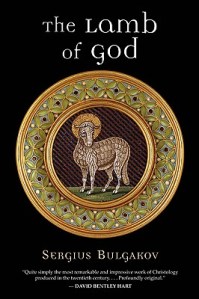
Book Review: The Lamb of God by Sergius Bulgakov (Christology)
The following is a review of the following book: Sergius Bulgakov, The Lamb of God (Grand Rapids, Michigan: Eerdmans, 2008). 472. pp.
The Inner Life of God
In Bulgakov’s theology, the inner life of God, creation, and the Incarnation, to be fully grasped, must be understood each in light of the other. It is difficult to describe each of these individually without reference to the other, which is a testimony to their irreducible complexity in Bulgakov’s theology. We will consider them one at a time, but cannot describe them apart from the others.
The inner life of God is also his Ousia [or nature] and “can be understood as God’s life and God’s power, that is, something entirely simple” (101). It is God’s “All-unity,” where Ousia and Sophia are identical (102). Ousia is not a hypostasis, but rather, “love” (104). Although not a hypostasis, Bulgakov refers to Sophia in personal terms, for “She is the divine life in God, who is love” (104). This love is to be understood as an eternal act of “self-positing” (94). This act of self-positing is to be understood as a “going out into another” (95).
It seems fair to say, then, that the Ousia of God is an eternal divine person factory of sorts. The Father is the principle of this love (98). He desires to “acquire himself” or “have himself … outside himself” (98). The other hypostases of the Trinity (the Son and Spirit) are different “realizations” of this self-positing love (94). The Son is the Father’s begetting of himself (self-positing of himself), the result of the Father’s going out into another [person] (98), while the Holy Spirit is the joy that comes from this begotenness (99). The Son, then, is the “self-actualization” of the Father (98) and the Holy Spirit is “precisely the joy of sacrificial love” (99).
Thus, these three hypostases are unified by virtue of this Ousia, this love, this self-positing, which is the Divine Life. None of these hypostasis can be proper understood without consideration of the other. In fact, each hypostasis, although equally God, does not posses divine nature “for Himself,” otherwise this would be tritheism (95). They possess this nature “in common” (95). The procession of the Holy Spirit (joy) from the Father to the Son is actually God’s own nature “as reality” (100). God’s life is not possessed by each hypostasis individually, but is “one life” (89).
Creation and Incarnation
Creatureliness is defined in terms of becoming (i.e. having potentiality, 96). Man’s nature is only “psycho-corporeal,” which implies potentiality and becoming (92). That is, man’s nature only consists of body and soul (92). Yet, man’s nature is not all that man is, for this nature is a “state” of man’s spirit (93). Since spiritual being is “rooted” in eternity in the divine life, it bears “consciousness” of this divine life (92). Thus, a part of man is “eternal” (93). “If man were capable of freeing himself from his natural essence by the power of spiritual life, he would simply be God” (94).
By breathing His breath into man, God poured out his “essence” into man (91). Creation, then, although in time and thus “becoming,” was created for “eternity” (157). This was not an arbitrary act, however, for creation was created to be united with God and thus the Incarnation “expresses the most fundamental and determining relation of God to the world,” quite apart from a consideration of the fall (170). God would have become Incarnate whether or not there was a fall to remedy; but since there was a fall to remedy, his Incarnation overcame this fall to accomplish the ultimate telos of creation—to become divine (169-71).
Divine-humanity, then, is not the by-product of the fall’s remedy, but the reason God created the world in the first place (so to speak). Creaturliness is “becoming,” and since Divine-humanity is what God intends for creation to “become,” it is easy to see that Christ is the epitome of creation’s eternal destiny, creation’s ultimate “norm.” Since Jesus is the ultimate end of creation (or epitome of it), he teleologically determines the beginning and everything in between (the Alpha and Omega in this sense, 169). God “wants to become man in order make man god” (171). The Third hypostasis’ proper “work” is the Incarnation (176). The Incarnation was man’s “adoption” of God into humanity through the ever-virgin Mary who is the culmination of God’s work in the world seen through the “Old Testament Church” (176-78).
In short, the relationship between the inner life of God and creation is revealed and epitomized by the Incarnation, which fits perfectly God’s Ousia of self-positing (going outside himself in sacrificial love).
Kenosis of Divine in the Incarnation
Once the distinction between God’s being in Himself and His being outside Himself for Himself can be seen, it is clear (to Bulgakov) that God in his being outside and for Himself has the freedom to limit Himself (223). “Such a possibility does not contradict God’s absoluteness” and unchangeability in his being as considered in Himself (223). The Incarnation did not involve that Christ not have the divine Ousia (since it rather presupposes the divine Ousia, since this self-emptying happens according to this sacrificial love which is God’s nature or Ousia) but rather involves Christ’s abandoning the “glory” of this Ousia in his descent from heaven (224). That is, Christ abandoned the “divine life,” in such a way that his nature “retains only the potential of glory” (224). “He retains only the nature of Divinity, not its glory” (224). Indeed the Son abandons the “closed ring of the Trinity [and] … remains outside it” (229). “The Creator became a creature” (229).
This does not mean that Christ’s manhood is not divine, however, as even all mankind, by virtue of their portion of the eternal spirit, already consists of a union between human nature (soul and body) and divine life (spirit) [230]. In Christ, the hypostasis of the Logos—which is already spiritual in nature—simply takes the place of the spirit. This makes the Incarnation less ontologically awkward (233-35). In Christ, therefore, there is a perfect communion of his spirit with Divinity and this sets him apart from other humans (235). His supreme divine-consciousness, however, co-exists with his human nature quite fittingly, just as a human spirit also bears consciousness of the divine (236). It does not “impart to the humiliated Christ the ‘properties’ of Divinity” (236). This helps explain (for Bulgakov) the “possibility and necessity of the coexistence of the two natures” in Christ (238). The unity of these natures involves the unity of the “wills” and “energies” in the divine-humanity of Christ (245-46). This means his actions were “Theandric” (247ff).
Christological Questions Answered by Bulgakov
How are we to conceive of Christ’s prophecy? Are we to understand this prophecy as coming from omniscience? This would seem to violate human nature. Bulgakov, rather, proposes that we understand the prophecies in Christ in a similar way we understand all divinely inspired prophecy: as “carried out in the domain of the unconscious until some thought, word, or vision shines forth in the consciousness” (323). Just as the Holy Spirit inspired and overshadowed the prophets of the Old Testament, so it was with Christ (324).
How are we to understand Christ’s apparent foreknowledge? Here, again, we are to understand his foreknowledge as coming both from the “subconscious” (below) and inspired also from above (the Holy Spirit, 329). This cannot be understood mechanically in any way. Rather, humans have the capacity of “prescience” in their minds and hearts “in proportion to the intensity of their relation to that at which they are directed” (329).
Christ’s priesthood is to be understood in parallel to other human priests (e.g. Aaron, Melchisedec, 335). His priestly “function” was sacrificial in nature (as attested by the Divine Eucharist) but epitomized by his prayer in John 17 where his focus is on deification (not redemption, 334-35). His priesthood consisted of offering himself to the Father by the Spirit (336).
The goal in each of these examples is to attain a human understanding of Christ’s action in such a way that it could be considered perfectly human. This would appear to mean that the actions of Christ could potentially be imitated by other human beings (who also have divine-humanity, even if their spirit is not the Logos).
Problems
Innumerable contradictions and problems exist with Bulgakov’s theology. For example, distinctions of persons in the Trinity break down in his understanding of the Ousia, self-positing love. If the Son is simply the result of the Father’s self-positing, and is the Father’s going outside himself into another person, the distinction between the person of the Father and the person of the Son breaks down. He is not suggesting that the Father posits his nature in the form of a hypostasis, but that he posits himself. This corresponds to the language of hypostasis. The Father’s love is to “posit” his own hypostasis into another hypostasis so completely that he is “outside himself” and “acquiring himself.” If the result of the Father’s self-positing is another person, this person must be considered the Father “outside himself,” but still himself (since this is a self-positing, a person’s traveling “into” another).
This self-positing cannot be the Father’s positing anything less than his own hypostasis, otherwise it would not be a self-positing, but some other kind of positing (e.g. ousia-positing, power positing, etc.). If the Father truly leaves himself to go outside himself, how can he still be with himself and thus be himself?
In seeking answers to these questions, I find myself beside myself, going out of myself through the corridors of my own mind. In other words, Bulgakov’s logic is enough to drive even professional theologians mad! Yet these questions are about the fundamental skeleton of Bulgokov’s ideas. At the very heart of his novel theological construction exist a fundamental breakdown in basic contours of classic Trinitarian theology.
This breakdown, for example, of the identity of the Father and Son as distinct hypostases, along with countless other logical conundrums in Bulgakov’s work, create more problems than they solve and outweigh the tensions of the Chalcedonian problematic he seeks to relieve. It would appear to this author that not even the theologians who attended The Council of Chalcedon could boast of the great mysteries (read: great contradictions) that Bulgakov’s theology embodies, which appears to solve the Christo-logical problem much like an unfaithful husband might relieve the problem of his own infidelity to his wife by becoming a polygamist. His solution to the “Christological problematic” simply multiplies the sort of logical tensions that gave rise to his work in the first place.
Review by Bradley Cochran
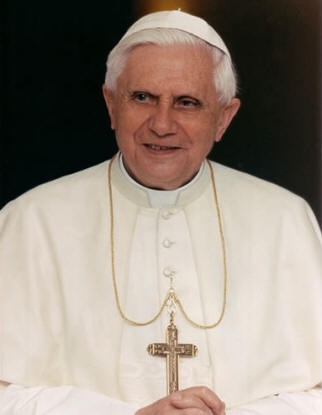
Book Review: The God of Jesus Christ by Pope Benedict XVI
The following is a book review of Pope Benedict XVI’s book, The God of Jesus Christ: Meditations on the Triune God (see below for bibliographic information). For more reviews on Pope Benedict (previously known as Cardinal Joseph Ratzinger before taking the office of papacy) click here.
 .
.
Ratzinger’s task in The God of Jesus Christ assumes that something is wrong with the state of theology—it is becoming more and more void of spiritual power that can “address man in his personal life” (9). To remedy the situation and build “a bridge between theology and proclamation, between theology and piety,” Ratzinger wants to “transfer” the doctrine of the Trinity from a “theoretical proposition” about God to “spiritual knowledge” (9). He also wants to do something similar with the Nicene affirmation that Jesus “came down from heaven” and “became a man” (9).
The prayer of Jesus plays a major role in Ratzinger’s attempt to build this bridge. This is because Jesus’ prayer, as Ratzinger understands it, is the clearest indicator of the nature of Jesus’ sonship. The reason Jesus is called “the Son” is because he remains dependent upon the power and love of the Father, and this dependence is his “highest dignity” (72). That Jesus “came down from heaven” means that he simply received and relied upon the life the Father had prepared in advance for him (67). Ratzinger uses the interpretation of Psalm 40 [39]: 5-7 found in the book of Hebrews to conclude that Jesus released his life and handed it back over to the Father—and this is what sonship is all about (67). Being a Christian, then, means imitating this kind of forfeiting of our lives to God and receiving God’s presence to dwell in us (68).
The very meaning of being a Christian includes being, like Jesus, “God’s son”—that is, “becoming a child” (35). In fact, “the very essence of what it is to be a man,” paradoxically, means “being a child” (71). But what does this mean? For Ratzinger, it means that we joyfully embrace the various ways in which we are dependent on others and in which our life is full of “advance gifts” (70, 36). The very fabric of life is, in a sense, inherited and preconditioned. For example, God does not consult us about whether we would prefer to be male or female, or whether we would prefer that there be more sexes than just two, or whether we would prefer to be given the gift of life—we simply burst into existence with features predetermined about ourselves, then remain completely dependent on the womb, breasts, and care of our mother (36). Our language and gestures by which we express ourselves are predetermined (70). Even “forms of thinking” are also “received” and “imprinted upon” the “human soul” (70-71). Rather than rebel against these “advance gifts” in attempt to reject the way God made things to be in order to delude ourselves into thinking we are somehow “autonomous” and get to determine everything for ourselves, we should gratefully receive and be astonished at life as little children (73-74).
Jesus’ prayer characterizes his life in the gospels; especially in Luke, who makes the choosing of the disciples a “fruit” of Jesus’ prayer (80). The story of Transfiguration in Luke happens while Jesus prays. For Ratzinger, this means that the “inner foundation of the Resurrection is already present in the earthly Jesus” (81). Ratzinger concludes:
Luke has raised the prayer of Jesus to the central Christological category from which he describes the mystery of the Son. What Chalcedon expressed by means of a formula drawn from the sphere of Greek ontology is affirmed by Luke in an utterly personal category based on the historical experience of the earthly Jesus; in substantial terms, this corresponds completely to the formula of Chalcedon. (82)
This is also confirmed by the fact that Luke, according to Ratzinger, links the confession of faith with Jesus’ solitude with the Father—that is, those who were with Jesus could see that he spent much time alone in fellowship and prayer with the Father and therefore understood that he was “the Son” (82). They understood that Jesus’ dialogue with the Father was what really “drove” Jesus’ existence (82). Through Jesus’ resurrection, he admits “human existence” into this dialogue of love so that “we are in God” (84).
If Ratzinger’s exegesis is right, he has indeed built a bridge from theology to “spiritual knowledge” of piety. That is, to the degree that Ratzinger’s understanding of sonship can be seen to be the very emphasis of the biblical language and picture of sonship, to this same degree Ratzinger has built a solid bridge. His treatment of Luke’s account of the calling of the Twelve is not eccentric, but based on recognized themes in Luke: the motif of “the mountain” as a symbol for closeness to God, Luke’s emphasis on Jesus’ reliance on the Father for his big decisions, when Jesus prays “something significant usually follows” (Bock, 538-40, 866). The emphasis on both prayer and sonship in Luke’s account of the Transfiguration makes Ratzinger’s emphasis on Jesus’ dependence as part of the “essence of his sonship” seem exegetically justified (81).
Other aspects of Ratzinger’s exegesis are less convincing. He appears to be reading too much into Luke’s statement that Jesus was “alone” yet “with” his disciples (82). It seems more reasonable to agree with Bock’s suggestion that Luke’s mention of Jesus being “alone” simply means that he and his disciples were away from the larger crowds (Bock, 840). It is debatable whether Jesus’ “seeing” the disciples while in prayer can be stretched to include all the conclusions Ratzinger draws: that the Church is “the” object of conversation between Jesus and the Father, that the Church is not just on Jesus’ mind and heart, but is actually “present” with Jesus while he is on the mountain in prayer, that Jesus “sees” the church in the Father, etc. (80).
Personal Response
One of Ratzinger’s theological preoccupations is to “rescue” theology or exegesis from being deprived of the kind of spiritual power it has the ability to unleash once informed by Christian faith. In his Jesus of Nazareth and “Biblical Interpretation in Crisis” for example, he is trying to rescue exegesis from those who deprive it of its power to speak into the present by anti-supernatural assumptions (Jesus of Nazareth, xvi; “Biblical Interpretation in Crisis,” 16), and here Ratzinger is trying to rescue aspects of theology that have lost their ability to “address man in his personal life” (9). That is, he is trying to rescue what will otherwise be relatively abstract theology that does not have any immediately obvious relevance for piety.
I deeply sympathize with Ratzinger’s concern for Christians not to let biblical exegesis or theology become a mere academic or abstract enterprise. Knowledge puffs up. Ratzinger also has many genuine exegetical and theological insights worthy of consideration. Unfortunately, I find his genuine insights clouded with the multiplication of ambiguities, imaginative exegesis, and vulnerable argumentation (Where did he come up with his argument that it is impossible for a “twofoldedness” to ever exist? What does his explanation of this argument amount to? [35]). In spite of this overall judgment, the key argument of the present book about Jesus’ sonship appears to be exegetically warranted and worthy of contemplation.
BIBLIOGRAPHY
Darrell L. Bock. Luke. Vol. 1 of 2. Baker Exegetical Commentary on the New Testament. Grand Rapids, Michigan: Baker Academic, 1994.
Ratzinger, Joseph. “Biblical Interpretation in Crisis: On the Question of the Foundations and Approaches of Exegesis Today.” This World: A Journal of Religion and Public Life. Reprint N.p., Summer 1988.
________. Jesus of Nazareth: From The Baptism In the Jordan To the Transfiguration. San Francisco: Ignatius, 2007.
________. The God of Jesus Christ: Meditations on the Triune God. Translated by Brian McNeil. San Francisco, California: Ignatius Press, 2008.
J.I. Packer’s Forward to Your Church is Too Small by John H. Armstrong
John H. Armstrong has launched a new website for his life-wrought book, Your Church Is Too Small, and you can actually read the forward (written by J.I. Packer) at this website. NOTE: This book is going to be huge in its impact; I have blogged about this book before.
Scot McKnight has already blogged once about this book at Jesus Creed. He ends with a question addressed to John.
On this new website, you can 1) get an overview of the book and read endorsements, 2) pre-order the book, 3) follow the new blog, 4) sign up for a FREE (yeah … that’s right) Conference around the book’s ideas.

Here is some of J.I. Packer’s forward:
My friend John Armstrong is a church leader who has traveled the distance from the separatist, sectarian fixity of fundamentalism to embrace the kingdom-centered vision of the church and the call issued by a number of Bible-based theologians and missiologists during the past half century.
What vision is this? It is the one that views the visible church as a single worldwide, Spirit-sustained community within which ongoing doctrinal and denominational divisions, though important, are secondary rather than primary. In this vision, the primary thing is the missional-ecumenical vocation and trajectory crystallized for us by our Lord Jesus Christ in his teaching and prayer and illustrated in a normative way by the Acts narrative and much of the reasoning of the apostolic letters.
Evangelicals have always urged that the church of God is already one in Christ but have typically related this fact only to the invisible church (that is, the church as God alone sees it). All too often, they have settled for division in the visible church (the church on earth, as we see it) as at least tolerable and at best healthy. The vision Armstrong offers, however, perceives by exegesis that the unity of Christians, which Jesus prayed that the world might see, is neither unanimity nor uniformity nor union (as he neatly puts it) but loving cooperation in life and mission, starting from wherever we are at the moment and fertilized and energized by the creedal and devotional wisdom of the past. Thus the internal unity of togetherness in Christ may become a credibility factor in the church’s outreach, just as Jesus in John 17 prayed that it would.
Embracing this vision will mean that our ongoing inter- and intra-church debates will look, and feel, less like trench warfare, in which both sides are firmly dug in to defend the territory that each sees as its heritage, and more like emigrants’ discussions on shipboard that are colored by the awareness that soon they will be confronted by new tasks in an environment not identical with what they knew before. There they will all need to pull together in every way they can. The church in every generation voyages through historical developments and cultural changes, against the background of which new angles emerge on old debates and truths may need to be reformulated in order to remain truly the same as they were. Not to recognize this is a defect of vision on our part.
You can read the rest of the forward here: yourchurchistoosmall.com.
Double Imputation: A Contradiction?
If what God says is the ultimate truth and all things that contradict such truth are non-truths, then consider the following scenario that follows from a doctrine of double imputation:
1) God says that as far as he is concerned, I’m innocent and perfectly righteous.
2) The Bible, my pastor, my friends, and my wife say that as far as God is concerned, I sin, and that I’m a sinner, and that I should constantly confess my sin to God, repent of it, etc. etc.
If the Bible is God’s word, then God says I’m perfect (1), then proceeds to tell me that I’m a sinner and need to confess my sins and repent of them (2).
Of course, the easy way out of this dilemma would be the “paradox vs. contradiction” distinction (i.e. they aren’t both true in the same sense). But it’s not that easy …
Both status claims are with respect to ultimate human culpability before God now and at the day of judgment. It is precisely because they are both claims about our status WITH RESPECT TO THE SAME THING that when we are declared righteous, it REPLACES our previous status as culpable sinners. That is, the logical preconditions for the doctrine of double imputation is dependent on the status of righteousness being an alternative status of the same kind in order for it to be a replacement.
But the implication of this would seem to be that we have two status’ before God—and whatever status’ we have before God are with respect to our ultimate culpability before God now and at the day of judgment. Therefore, we have two ultimate status’: 1) filthy, deserving of eternal damnation sinner and 2) perfectly righteous and deserving of eternal life.
If the status of Christ replaces our natural/earned/inherent status in Adam, then such entities must apply to the same KIND of status God has in mind for judging us on the last day, and therefore, it would not seem easy to use the paradox vs. contradiction distinction (at least not without a lengthy philosophical explanation or invoking of the category of mystery in the face of an apparent contradiction).
Other practical problems arise. Whoever is perfect actually deserves eternal life. If Christians are perfect in the present time (since God says they are once they believe in Christ and right now they are believers), they should be treated as perfect (i.e. we should live according to God’s ultimate truth).
If I really believe that the most ultimate truth about my brother in Christ’s status is that he is perfect, I should seek to treat him according to God’s truth—as one who is perfect. This goes beyond merely comforting him that he will be accepted by God on the day of judgment, but treating him as perfect every day of his life NOW (since this is God’s truth NOW and FOREVER).
But, of course, God’s word also says everyone (except Jesus) still sins and is therefore a sinner. And this is the tension I am trying to shine a light on. Do you see it? God says we are both perfect and not perfect, and it seems to be in the same sense—that is, this sense: before Him, in his judgment, as it relates to his evaluation of our culpability and moral status.
For those who accuse the double imputation of being guilty of a legal fiction (God proclaiming us to be something that we are in fact not), the response is usually this: Whatever God declares about us IS what’s true about us, so if God says we are perfect, it’s not a legal fiction—it’s the truth.
Before God, and in the sense of his moral and ethical evaluation of Christians, they are both perfect and non-perfect at the same time and (seemingly) in the same sense.
I could’ve spend a lot more time trying to articulate this tension more carefully and eloquently, but I don’t have the time. Sorry. Hope you get it. I’m sure this has been discussed somewhere in depth in some theological or philosophical journal somewhere, but I would love to read something in depth on this to get answers.
Anyone have any helpful thoughts or resources?
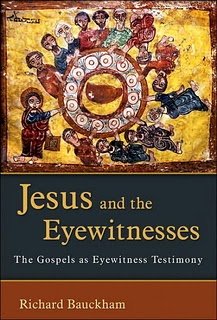
Book Review: Jesus and the Eyewitnesses by Richard Bauckham
The following is a book review of Richard Bauckham’s book Jesus and the Eyewitnesses: The Gospels as Eyewitness Testimony (Eerdmans, 2006). 538 pgs.
Introduction
For hundreds of years now, Christians have been told their main sources for the person of Jesus are corrupt. The real historical Jesus, if he can be known at all, cannot be known by the NT gospels.
Does history, then, undermine faith?
Bauckham does not think so, and he makes an unprecedented historical case for understanding the gospels as faithfully representing the eyewitness testimony of early Christians who knew Jesus and witnessed his ministry, miracles, and resurrection. His exceptionally conservative approach, although not shared by most scholars and historians, has created a splash in New Testament studies. His case cannot simply be ignored.
Bacukham’s proposal in Jesus and the Eyewitnesses for understanding the Gospels as eyewitness testimony, though lucid and cogent, is nevertheless complex and multifaceted. The ingenious originality of this work, combined with its broad scope of unexplored possibilities, have led at least one reviewer to criticize it on the grounds that “the sheer amount of information and analysis … presented is overwhelming at times” (Byron, 115).
To get a handle on a quick summary, this review will attempt to first explain the significance of the work by setting it in the context of mainstream scholarship on the gospels. Second, we will briefly highlight Bauckham’s reconstruction of the historiographic context in which the gospels were written, how oral tradition and memory fit into his argument, his explanation of the unexplained phenomenon of names in the gospels, and finally, his case for the identity of the “beloved disciple.”
Uncontrolled Oral Transmission Over Several Generations
Central to the current project of form criticism, argues Bauckham, is this assumption: by the time the oral Jesus traditions crystallized in the written gospels of the Christian canon, they no longer faithfully preserved the real history of Jesus of Nazareth. This is because such oral traditions were, according to form critics, subjected to “a long process of anonymous transmission” relatively uncontrolled (6, 8). The original arguments of form critics such as Bultmann compared the oral transmission process to folklore, which passed from generation to generation over long periods of time. Such a model, it was thought, explains why such a wide variety of both similarity and dissimilarity exists between the gospels.
Such a model is now rejected. The unchecked presupposition of form critics that the anonymous transmission over a long span of time, however, stubbornly remains (7, 249). Thus, speculations about what Sitz im Leben each literary unit originated from leave the impression that the gospels shed more light on the early church’s faith than the historical person of Jesus (244). Such a dichotomy inevitably forces historians to reconstruct alternative Jesus’s with imaginative speculations (3).
The “generally accepted” dates for the gospels make any comparison with folklore entirely inappropriate by severely limiting the intervening period of time between the events of Jesus’ ministry and the writing of the Jesus traditions (7). Furthermore, the assumptions by which form critics understood themselves to be discovering the pure form of the oral tradition have been undermined by subsequent scholarship. For example, Mark’s gospel was thought to be composed of short saying or stories about Jesus superficially strung together by the redactor (242).
More sophisticated connectivity and plot, however, have long since been recognized in Mark by form critics themselves (243). Scandinavian scholars have examined models of oral transmission in rabbinic Judaism (as opposed to Folklore or Hellenistic literature) and concluded that it provides a model for understanding the early Jesus traditions (249). Kenneth Baily’s studies on oral tradition have also influenced scholars like N. T. Wright and James Dunn, moving scholarship well beyond the initial form critical mold (252). Scholars now openly challenge Bultmann’s “laws” of tradition (247) and believe “the kind of tradition history Bultmann thought could be reconstructed did not exist” (248).
The Historiographic Context of Early Christianity
Contrary to form critical orthodoxy, the earliest evidence for how the early Christians would have conceived of the composition of the gospels suggests that the Jesus traditions were “attached to specific named eyewitnesses” or “tradents” (20). Papias might have written in 110 C.E., but the time period he recalls when the Jesus traditions were still being sought after was much earlier, which makes the Papian fragments crucial evidence for the “historiographic context” in which the gospels were composed (14, 24). Bauckham’s analysis concludes that Papias’s wording reflects the “historiographic ‘best practice’” of valuing first-hand eyewitness as the most important source in historical accounts (24).
Borrowing the language of Byrskog, Bauckham understands Papias to have sought either “autopsy” or “indirect autopsy” (from living eyewitnesses such as John the Elder or disciples of such tradents such as Aristion) according to the standard practice of the day for writing history (24). His “deliberate” language of the viva vox had “wide currency” during this time (cf. Loveday Alexander’s research, 21-23) and therefore is the proper historiographic context for understanding how the gospels were written (22, 25). Eyewitness testimony was considered the most important source, but the job of the historian was to preserve these faithfully while giving them the “properly ordered form,” as Kürzinger’s translation makes more clear in Papias’s intentional appeal to this language (26).
For Bauckham, “a key implication” is this: the evidence of the Papian fragments shows that the Jesus traditions were tied to the eyewitnesses who originated them (28). Diametrically opposed to the assumptions of form critics, Papias’s account shows that the more “anonymous” the tradition was, the less valuable it was to Papias (29). If this is the earliest extra-biblical evidence for how early Christians sought to write their own account of Jesus’ life and ministry, we should expect that the gospels were written with the same historiographic goal in mind. This would make sense, for example, of the strong extrabiblical tradition that the gospel of Mark was derived chiefly from the eyewitness of Peter, and the parallel to Papias’s Prologue in Luke’s introduction (Luke 1:2).
Formally Controlled Transmission with Limited Flexibility
Bauckham borrows from Bailey’s work (as do Wright and Dunn) to suggest that the historiographic context (in which individual tradents of the Jesus tradition were authoritative guarantors) calls for a more nuanced conception in which the essentials of the oral tradition were “formally controlled” from the outset by eyewitness who were such “from the beginning” (262) while a limited amount of flexibility was allowed regarding the retelling of peripheral details (258, 287). In this case, a reasonable use of Ockham’s Razor would suggest that “there is no good reason to suppose that the range of variation of particular traditions was even greater than the range we find in the Gospels themselves” (259).
This is confirmed by Pauline language of “the traditions” (1 Cor 11:2) that he “received” and subsequently “delivered,” expecting them to “hold fast” to it (e.g. 1 Cor 15:1,3; Gal 1:9; Col 2:6; 1 Thess 2:13; 4:1; 2 Thess 3:6) without corrupting it (264). Paul understood himself to be the “mechanism of control” (258) of this tradition in the Christian communities while the Jerusalem church still played the central role of authority (265-266).
The Role and Reliability of Memory
Bauckham also wants to rid readers of the impression that once oral tradition is absorbed into the “collective memory” of a community, it becomes disconnected with the individual memory of the eyewitness tradent (292-293). Since the content of these formally controlled traditions involves memory, and since reconstructive theories have tended to emphasize the unreliability of memory, Bauckham navigates the research to explore how the evidence of such research can in fact support the general reliability of the eyewitness testimony of the earliest disciples, and how “deferred meaning” can be a legitimate way of making better sense of the whole of one’s experience, retrospectively constructing a more satisfying “meaning” in the present from the “facts” of the past (319-357).
The Phenomenon of Names & The Synoptic Problem
If Papias was so eager to tell his readers that his rendition of the Jesus traditions was informed by eyewitness sources, and this was so important to the early Christian community—why are the gospels not also prefaced with attributes to their sources? With some qualifications, Bauckham is able to argue that the gospels, in a subtle way, do in fact attribute the whole of their account to eyewitness.
Although eyewitnesses other than the twelve appear in the gospels indicating eyewitness testimony of minor tradents (especially for Luke’s account), the outstanding preservation of lists of those who were with Jesus “from the beginning” also demonstrates their central role in the controlling of the traditions (114-147). Bauckham’s chapter on Palestinian Jewish names shows that it is unlikely these names were simply added as literary devices (67-84). This makes the claim that they were preserved because they were the sources behind the traditions more plausible (84).
Although among the twelve disciples only a few of them have any significant roles in these gospels, their names are carefully preserved with Peter always at the front of the list due to the chief role of his eyewitness authority. There are traces of a “Peterine perspective in Mark” along with what Bauckham calls the literary devise of inclusio in which Peter’s name is carefully placed at the beginning and end of the book to indicate qualification for being the authentic eyewitness source for Mark’s gospel (155-182).
This is confirmed again by Papias’s fragments that speak of Mark as Peter’s “interpreter” (which just means he had to translate Peter’s Aramaic into Greek like a secretary, 206). Certain anonymous persons who aided Jesus, anointed him as Messiah in his messianic visit to Jerusalem, or defended him with use of violence at his arrest remain anonymous for protective purposes (this he calls “protective anonymity,” 183-201).
Bauckham argues that Papias must have compared Mark unfavorably to the other gospels, however, for its lack of chronological order (taxis), and this explains why the other synoptic gospels were written (219). Luke’s gospel built off Peter’s testimony in Mark, and therefore similarly has the Petrine inclusio, yet is especially enriched by the women eyewitnesses and thus forms a double inclusio (130-132).
Mark’s lack of taxis also helps explain why Matthew wrote his gospel, according to Papias, in “the Hebrew language” with taxis, but then the ordinary freedom others took in translating it tarnished this order (222-224). This helps explain, in turn, why the gospel of John, with its more precise chronology, was written (225), which contains the name of its eyewitness author—the “beloved disciple” (227-228).
The Case for the Identity of the Gospel of John
Bauckham reestablishes the epilogue as authentic and integral to the gospel then argues that the author of the gospel who speaks with an “authoritative we” in John is none other than “the beloved disciple”—an eyewitness “from the beginning” according to that gospel (358-383). The author wrote this gospel through self autopsy with the help of other individual disciples; this explains the gospel’s eccentricity (403). It is the most theologically audacious gospel also for this reason—it was the only gospel written by an eyewitness “from the beginning” (411). But who is its author?
Papias’s Johannine language, list of disciples, and favoring of John’s gospel, along with his talk about “John the Elder,” makes it plausible that this John was the author of the gospel (417-423) but Eusebius edited his comments about this due to his own bias (424). The Muratorian Canon also appears to rely on Papias (427). Polycrates identifies John of Ephesus as “a priest, wearing the high-priestly frontlet,” the most unambiguous way to designate him as high priest (445-446). The simplest explanation, suggests Bauckham, is that Polycrates and the Ephesus tradition simply identified John with the John in Acts 4:6, for such exegetical identification was common in the early Christian movement (451). But this means they did not identify him with John the son of Zebedee (452). Finally, Irenaeus, who came from the province of Asia, identifies the John of Ephesus with the author of the gospel of John (453).
STARING ACROSS LESSING’S GREAT DITCH
Details of Bauckham’s case may be disputed, but his approach as a whole, as Bond points out, depends on “whether the hypothesis as a whole accounts for the evidence better than that of the form critics” (Bond, 270). If it stands the test of further research, scholars who have become cozy and comfortable in their skepticism may find themselves uncomfortably close to the real Jesus of history. Rather than a chasm between the Christ of faith and the Jesus of history, Lessing’s Great Ditch will be narrowed to only a short leap. For many this might open the floodgates of exciting new possibilities for a union between synoptic historical integrity and Christian faith.
BIBLIOGRAPHY: OTHER REVIEWS CONSULTED
Bond, Helen K. Review of Jesus and the Eyewitnesses: The Gospels as Eyewitness Testimony, by Richard Bauckham. Journal of Theological Studies, no. 1 (April, 2008): 268 – 271.
Byron, John. Review of Jesus and the Eyewitnesses: The Gospels as Eyewitness Testimony, by Richard Bauckham. Ashland Theological Journal 39 (2007): 113 – 115.
Downing, Gerald F. Review of Jesus and the Eyewitnesses: The Gospels as Eyewitness Testimony, by Richard Bauckham. Theology 111, no. 861 (May-June, 2008): 190 – 191.
Köstenberger, Andreas J. Stephen O. Stout. Review of Jesus and the Eyewitnesses: The Gospels as Eyewitness Testimony, by Richard Bauckham. Bulletin for Biblical Research 18, no. 2 (2008): 209 – 231.
Paget, James Carleton. Review of Jesus and the Eyewitnesses: The Gospels as Eyewitness Testimony, by Richard Bauckham. Journal of Ecclesiastical History 59, no. 1 (January, 2008): 83 – 84.
Palmer, Darryl W. Review of Jesus and the Eyewitnesses: The Gospels as Eyewitness Testimony, by Richard Bauckham. Austrailian Biblical Review 56 (2008): 77 – 79.
Perry, Peter S. Review of Jesus and the Eyewitnesses: The Gospels as Eyewitness Testimony, by Richard Bauckham. Currents in Theology and Mission 35, no. 6 (December, 2008): 450.
Scaer, Peter J. Review of Jesus and the Eyewitnesses: The Gospels as Eyewitness Testimony, by Richard Bauckham. Logia 16, no. 4 (2007): 58 – 60.
Taylor, Nicholas H. Review of Jesus and the Eyewitnesses: The Gospels as Eyewitness Testimony, by Richard Bauckham. Journal for the Study of the New Testament 30, no. 5 (2008): 40 – 41.
Tolppanen, Kari. Review of Jesus and the Eyewitnesses: The Gospels as Eyewitness Testimony, by Richard Bauckham. Toronto Journal of Theology 24, no. 1 (2008): 98 – 100.
Wicker, James R. Review of Jesus and the Eyewitnesses: The Gospels as Eyewitness Testimony, by Richard Bauckham. Southwestern Journal of Theology 50, no. 1 (2007): 96 – 98.
Raw Footage of Persecution in India
For Raw Video, CLICK HERE. The persecution of Christians in India will make your stomach curl. Pray for the people who live there: whether they are Christians or not.
::::::::::::::::::::::::::::HT: The Crimson Window
Book Review: The Beast of Revelation by Kenneth Gentry
The following is my Book Review of: Kenneth L. Gentry, The Beast of Revelation. Powder Springs, Georgia: American Vision, 2002.

Introduction
Although Kenneth Gentry has amassed considerable evidence from historical sources in his attempt to argue for the preterist position, he rightly complains that church tradition has played too large of a role in the dating of the book of Revelation while the internal evidence often is not given its proper weight (4-5). Although Gentry must assume an early date of Revelation for his position to carry any weight, he nevertheless organizes his book so that the internal evidence is given prominent importance.
The first half of his book is spent showing just how impressively the Roman Emperor Nero appears to satisfy all the prophecies of the Book of Revelation. The second half of the book, however, is given to strengthening Gentry’s position by exploring the different types of evidences for an early date of Revelation—including external evidence. While giving internal evidence the loudest voice for the dating of Revelation, Gentry by no means marginalizes external evidence. On the contrary, he gives a thorough look at the evidence used for a late date and engages late-date arguments with remarkable aptitude.
In this review I will attempt to mostly summarize Gentry’s reasoning, with words of appraisal more or less sprinkled throughout. Because the material on the evidence for a late date is more complex and difficult to summarize, my comments about the second half of the book will be selective. It is no wonder that the evidence and argumentation Gentry marshals for an early date and Neronic theory of the Beast has been compelling enough to cause those who still hold for future fulfillment of the prophecies of revelation to capitulate by granting an first century fulfillment of the majority of the events of Revelation—“though they attempted to argue for a double fulfillment of prophecies” (96).
The Neronic Theory: The Beast of Revelation
Gentry begins by listing all the biblical details about the beast in the book of Revelation (8-10). The beast
1) has a number—666—which is “that of a man” (Rev 13:18)
2) is an evil man of debased character (Rev 13, 17, 18)
a) depicted as a compound of three wild carnivores (Rev 13:2)
b) wages war against the saints (Rev 13:7)
c) demands worship for himself (13:8, 12, 15)
d) arrogantly blasphemes God (13:5-6)
e) carries with him a despicable harlot (Rev 17:3-4) that is drunk on the blood of the saints (Rev 17:6; 18:24)
3) possesses “great authority” (Rev 13:2, 7)
4) is one of John’s contemporaries (Rev 1:1, 3; 22:6, 10)
5) is relevant to first century Christians (Rev 1:3-4, 11, 13:8)
Based on this criterion for identification of the beast, Gentry disagrees with Leon Morris that possibilities for identifying the beast are endless (10). He calls the shift in imagery from identifying the beast as a kingdom in some places (Rev 13:1 cf. 17:10-11) and an individual in other places (Rev 13:8; 17:11) a shift between the “generic and the specific” and admits it is a frustrating aspect of the description of the beast: is it a kingdom or a man? (10).
Rather than picking between the two, Gentry identifies the beast “generically considered” as the Roman Empire, and the beast individually considered as a first century Roman Emperor: Nero Claudius Caesar (13). The seven heads, which the book of Revelation interprets as the “seven mountains” (Rev 17:9) undoubtedly refers to the Rome, “the one city in history distinguished by and recognized for its seven mountains” (12). What is more, “both secular and ecclesiastical history record that the first imperial persecution of Christianity began in this seven-hilled city under the emperor Nero Caesar in A.D. 64.” (12).
A brief historical survey of Nero’s life—without explicitly pressing any analogy to the beast of Revelation—leaves the reader half-way convinced before the book really gets into the details of argumentation (11-19). If nothing else, the reader is convinced that Nero fits the description of an evil man of debased character.
He castrated the boy Sporus, tried to make a woman out of him, then he “married” him with the usual wedding ceremonies of the day (16); he covered himself in wild animal skins and attacked the private parts of men and women bound to stakes as a game; he murder his own mother (who was the one responsible for bringing him to power!) and ordered Seneca to commit suicide (which he did!); he divorced his wife to marry his mistress Poppaea; he banished Octavia to an island upon Poppaea’s orders and had him beheaded, then later kicked Poppaea to death while she was pregnant and ill; he exhausted the imperial treasures for “self-glorifying building projects and profligate living,” and falsely accused Roman nobles of various crimes in order to confiscate their estates; he is said by Suetonius to have “showed neither discrimination nor moderation in putting to death whomsoever he pleased on any pretext whatever”; he accused Christians of starting the fire that burnt Rome and persecuted them mercilessly; he neglected his rule of Rome for a two year visit to Greece to appear in their musical festival—because he vainly fancied himself as one of the world’s greatest musicians (16-17)!
His wickedness was so great, his own subjects and military leaders rebelled against him, and when he heard they were going to put him to a cruel and shameful death, he rammed a sword through his own neck with the assistance of his secretary Epaphroditus (18).
In his chapter, “The Relevance of the Beast,” Gentry drives home the “strategic placement of the time references” (John carefully brackets Revelation with bold time references) and the “frequent repetition” of these time references (24). In at least eleven verses John warns his audience of the nearness of the events prophesied in the book (Rev 1:1, 3; 2:16; 3:10-11; 6:17; 10:6; 22:6, 7, 10, 12, 20). John’s varied expression of the temporal references makes it difficult to doubt his meaning (24-25). These temporal references parallel the temporal references in the other New Testament books (Mt 23:36; 24:34; 26:64; Mk 9:1; Acts 2:16-20, 40; Rom 13:11, 12; 16:20; 1 Cor 7:26, 29-31; Col 3:6; 1 Thess 2:16; Heb 10:25, 37; Jm 5:8, 9; 1 Pt 4:5, 7). A helpful comparison with Daniel shows that while Daniel seals his prophetic work because its events were far off in the distant future, John, on the other hand, was commanded not to seal his work on account of the nearness of the time (Dan 12:4; Rev 22:10).
Interpretations that understand John’s warning that “the time is near” (Rev 1:3) to be telling his persecuted audience that “when help comes it will come with swiftness—even though it may not come until two or three thousand years later” (e.g. Walvoord and Ice) or “the events are always imminent—though the readers and their great, great grandchildren may never experience them” (e.g. Mounce and Johnson) or “God will send help soon—according to the way the Eternal God measures time” (e.g. Swete and Morris) would be tantamount to a cruel mocking of the circumstances of the churches to which John wrote (27-28). Gentry believes that these approaches are “destroyed by the very fact that John repeats and varies his terms” for temporal proximity (27). He also reminds his readers that Revelation functions as an “occasional epistle” to first century Christians (28).
In light of the temporal references in Revelation (not to mention the obvious references to first century entities), why would anyone have trouble understanding the prophecies of Revelation to be fulfilled in the first century A.D.? The most obvious answer is this: the temporal references also apparently apply to the second coming of Jesus Christ, which does not appear to have occurred: “Behold, He is coming with the clouds and every eye will see Him, even those who pierced Him” (Rev 1:7); “I am coming quickly” (Rev 3:11).
This leads less conservative handlers of the biblical revelation to conclude that John’s expectancy—like that of the early church in general—was simply mistaken, much like religious enthusiasts throughout Church history that expected Christ to return in a certain year during their lifetime (26). This seems to force those who believe in the doctrine of inspiration to find some other way to interpret the temporal references like Walvoord, Ice, Mounce, Johnson, Swete, Morris, and many others have done. However, Gentry offers a much easier and viable alternative: rather than mustering up strained interpretations of the temporal references, Gentry’s approach is to understand the language about Christ’s “coming” on the clouds from the vantage point of apocalyptic symbolism (28-29).
This cloud-coming of Christ in judgment reminds us of Old Testament cloud-comings of God in judgment upon ancient historical people and nations (Pss. 18:7-15; 104:3; Isa. 19:1; Joel 2:1, 2; Hab. 1:2ff.; Zeph. 1:14, 15). For example, Isaiah 19:1 speaks of an historical, Old Testament judgment upon Egypt: “The oracle concerning Egypt. Behold, the Lord is riding on a swift cloud, and is about to come to Egypt; the idols of Egypt will tremble at His presence, and the heart of the Egyptians will melt within them” (29).
Just as this cloud-coming imagery is employed when God used the armies of the ancient empires to bring his judicial judgment upon whatever people he desired in the Old Testament, including Israel, so John, operating within the Jewish tradition, employs similar language to prophesy judicial judgment upon “those who pierced him” (Rev 1:7). Who are those who pierced him? “The New Testament emphatically points to first century Israel as responsible for crucifying Christ (John 19:6, 15; Acts 2:22-23, 36; 3:13-15; 5:30; 7:52; 1 Thess 2:14-15)” (29). What is more, Jesus also warned the Jewish leaders that they would witness this coming judgment (Mt 26:64 cf. 23:31-36; 24:30, 34). Not only did the Jewish War with Rome bring about the slaughter of 1.1 million Jews according to Josephus, but historians record “the utter devastation of Jerusalem, the final destruction of the temple and the conclusive cessation of the sacrificial system … [which was] a unifying national symbol” (30).
God’s using Rome to execute his punishment on the Jews reminds us of the devastation God brought upon Israel by means of the ancient Assyrians and Babylonians, but “the covenantal significance of the temple’s demise stands as the most dramatic outcome of the war” (31). It brought an end to Torah-keeping Judaism because without the temple keeping the details of Torah is impossible (31). “The loss of the temple was an unrepeatable loss, for it has never been rebuilt … any Jewish calamity after A.D. 70 would pale in comparison to the redemptive-historical significance of the loss of the temple” (31). Because the prophecies of the Beast are entwined with the prophecies of soon-to-come judgment of the Jewish nation—which was fulfilled in 70 A.D. when Rome sacked Jerusalem—the Beast must be a first century figure. “To assert that the Beast is any contemporary figure existing in our own time (or in our future) absolutely misses John’s entire point” (32).
As satisfying as Gentry’s hermeneutics are compared to those whose interpretations do not do the temporal references justice, his arguments for the number of the Beast are even more satisfying and fascinating. He does not regard the number 666 as an uncertain mysterious riddle, but a number that John expected his contemporaries to understand (Rev 13:18). The practice of cryptogram—using the double function of alphabets to assign a given name a numerical value—was a common phenomenon in Ancient cultures. “Archaeologists have discovered many illustrations of cryptograms as graffiti on ancient city walls” (38).
For example, the Greek inscription “I love her whose number is 545” was found in an excavation at Pompeii (38). Thereby, “the name of the lover is concealed; the beloved will know it when she recognizes her name in the sum of the numerical value of the 3 letters” (40). More relevant to our topic, “anti-Nero cryptograms were already circulating when John wrote Revelation” (40). Consulting the Babylonian Talmud and other ancient Rabbinic writings shows that the practice of cryptogram was also used by Jewish Rabbis. “The ancient Christian sibylline Oracles has Jesus’ name as equivalent to ‘888’ and makes use of number values to indicate initials of various Roman emperors, including Nero” (40).
John’s reducing the name of the Beast (“the number of a man”) to the numerical value of the letters of his name, then, was a common practice of his day—not our own. “Several scholars of the nineteenth century—Fritzsche, Holtzmann, Benary, Hitzig and Reuss—each stumbled independently upon the name Nero Caesar almost simultaneously” (42). The spelling of Nero’s name as it is found in Hebrew spellings in archeological finds turns out to yield exactly the number 666 (42). Giving even more confirmation is the fact that a significant number of manuscript variants have 616 rather than 666. Such a variant is not easily dismissed as a copyist error, but is widely believed to have been intentional. Gentry reasons:
When Revelation began circulating among those less acquainted with Hebrew, a well-meaning copyist who knew the meaning of 666 might have intended to make its deciphering easier by altering it to 616. It surely is no mere coincidence that 616 is the numerical value of “Nero Caesar,” when spelled in Hebrew by transliterating it from its more common Latin spelling. This conjecture satisfactorily explains the rationale for the divergence: so that the non-Hebrew might more readily discern the identity of the Beast. Even late-date advocate Donald Guthrie, who rejects the Nero theory, grants that this variant gives the designation Nero “a distinct advantage.” As renowned Greek scholar Bruce Metzger says: “Perhaps the change was intentional, seeing that the Greek form Neron Caesar written in Hebrew characters (nrwn qsr) is equivalent to 666, whereas the Latin form Nero Caesar (nrw qsr) is equivalent to 616.” Such a possibility offers a remarkable confirmation of the designation of Nero (43).
One of the major objections to this view of the mark of the Beast is the silence of the early church fathers (44). But Gentry points out that Irenaeus admits ignorance on the matter rather than proposing an alternative designation for the cryptogram (44-45). Arguments from silence are the weakest kind (45). After exploring several arguments against the Nero theory, Gentry concludes: “Only with great difficulty may we discount the many ways in which Nero fits the expectations of Revelation. [Nero] is the only first-century historical figure that can possibly fulfill all of the requirements.”
In chapters four through seven, Gentry shows how Nero, the Beast specifically considered, sufficiently and uniquely fulfills the depictions of the character, war, worship of the Beast, and how the Roman Empire of the first century, generically considered, fulfills the depiction of the death and revival of the Beast. Gentry shows how Nero more than qualifies to fulfill the expectation of the character depicted of the beast in the book of Revelation. Nero was of such a beastly nature, he was given the nickname “beast” by a pagan writer Apollonius (53). The Sibylline Oracles refer to Nero as “a destructive beast” and “the great beast” (53). Corresponding to Revelation’s imagery of the Beast as one who is given “power to make ware against the saints” (Rev 13:7) for forty-two months (Rev 13:5), Nero removed Christianity from the protected status of religio licita and began the first Roman imperial persecution of Christians, setting a legal precedent that undoubtedly influenced future persecutions of Christians by other Roman emperors (62-63).
What is more, a cacophony of historians witness that Nero’s assault on Christians was arguably the most severe, consisting of “public butcheries frequently recurring on a colossal scale” (65-66). As if this were not enough, the Neronic persecutions lasted from the latter part of Novermber in A.D. 64 to June A.D. 68—exactly the length of time (but for a few days) the writer of the apocalypse of Revelation prophecies! In contrast with this, the Domitianic “persecution” is scarcely even documented—not even mentioned by a single secular historian of the era (69). Corresponding to the imagery of the worship of the Beast (Rev 13:4), Nero received and demanded worship while still alive—a practice even bolder than the imperial cult of emperor worship that was a familiar feature of Rome’s imperial history which allowed for emperors to be worshiped only after they were dead (81-82). “Nero himself actually demanded such worship in a way unsurpassed by any previous emperor, except, perhaps, for Caligula” (84).
The manner of Nero’s death—suicide by sword—corresponds to the prophecy of Revelation 13:10 (89-90). The chaos that ensued after Nero’s death corresponds to the mortal sword wound inflicted on the head as a wound that should have been fatal to the Beast generically considered in Revelation 13:3-4 (91). With the death of Nero, “the Julio-Claudian line of emperors perished from the earth,” and the civil wars that followed were of such great ferocity and of such dramatic proportions that they almost destroyed the empire (92). However, what might have been the death blow of the Roman empire was rescued when the Flavian family firmly established a new royal line (95). This unexpected bounce back was enough to add to the Roman prestige. “The relevant verses in Revelation reflect the death and revivification of the Beast, that is, the earth-shaking historical events of the late 60s wherein Rome died (A.D. 68), as it were, and returned again to life (A.D. 69).
The seven heads of the Beast represent seven kings, and the Beast is herein considered generically as the Roman Empire with its line of emperors: “Five have fallen, one is, the other has not yet come; but when he does come, he must remain for a little while. The beast who once was, and now is not, is an eighth king. He belongs to the seven and is going to his destruction” (Rev 17:9-11). Because “the beast” imagery in this passage represents the Roman Empire—not an individual Emperor—the eighth king refers “to the revival of the Empire itself under one [Vespasian] who is outside of the originally specified seven kings. … In addition, the number eight appears to be the number of resurrection” in first century Jewish thought because “the eighth day is the beginning of a new week” (97).
The Dating of Revelation: Internal and External Evidence
In the second half of his book, Gentry focuses on the dating of Revelation. He underscores its importance for interpretation. The early date outlook views Revelation as having been written prior to the destruction of Jerusalem and the temple—Gentry opts for sometime between A.D. 64 (after the Neronic persecutions broke out) to early 67 A.D. (just prior to Rome’s attack against the Jews known as the Jewish Wars). “The position one takes on this issue has a great bearing on the interpretive possibilities available” (106). Gentry’s basic argument is that the early date allows for Revelation to contain the appropriate level of relevance to its immediate audience while the late date lends the prophecies of Revelation to “be opened to an endless series of speculative scenarios, which could be extrapolated into the indefinite future” and minimizing original audience relevance (110-111).
The broad consensus about the theme of Revelation strengthens Gentry’s argument because the theme is the soon “coming” of Christ, which was intended to comfort the first century churches undergoing persecution (116-117). Comforting the early church by prophesying a soon coming of Christ against “those who pierced him” makes little sense if such a “coming” lie millennia away and would in no way alter the situation of the early church. “Only a pre-A.D. 70 date fits the circumstances” (127). Furthermore, the “tribes of the earth” who “morn” at this coming refer to the Jewish tribes because the Greek word translated “earth” is better translated “land,” in which case the theme verse of Revelation would read:
Behold, he is coming with the clouds, and every eye will see Him, even those who pierced Him [i.e. the Jews: John 19:6, 15; Acts 2:22-23, 36; 3:13-15; 5:30; 7:52; 1 Thess 2:14-15] ; and all the tribes of the land will mourn over Him. –Revelation 1:7
When the word “the land” occurs with the definite article and without any modifiers in the Bible it signifies the Promise Land—namely, Israel (120-121). Couple this with Jesus’ seven woe’s and warnings that to the Jewish leaders, saying “upon you will come all the righteous blood that has been shed on earth … All this will come upon this generation. … Look, your house [i.e. the temple] is left to you desolate” (Mt 23:35-36, 38). The Christians, then, who had experienced persecution from the Jews and imperial Rome, would be comforted by the prophecies of Revelation that assured them of the coming destruction of both the Jews (Rev 1:7) and the Beast [Nero] (13:10; 17:11) “must soon take place” (Rev 1:1). In light of this, any understanding of these prophecies that anticipate their fulfillment over two millenniums beyond the persecuted Christians to whom John wrote to comfort is hard to understand.
The theme of Revelation, then, and the very reasons for being written, are internal evidence in favor of a pre-A.D. 70 date. In the book of Revelation, the “sixth king” is the one who “now is” (i.e. is presently reigning). If Gentry’s interpretation is correct, then, this would have to refer to Nero. It just so happens, that Nero was the sixth ruler of the Roman Empire (139). But there is yet more. “Historically the next ruler of the Empire reigned only briefly. … The next ruler to appear after Nero was Galba, who reigned only seven months. … By almost any standard, Galba’s brief rule of seven months was a ‘little while’—Nero’s immediately preceding rule had exceeded thirteen years” (139). Although some object that Nero was actually the fifth ruler of the Roman Empire on the grounds that Julius Caesar was technically not an emperor and that John is talking about “kings” and not emperors, the audience of John’s day—including Roman and Jewish historians—unanimously understood Julius Caesar to be the first of the line of Emperors, and the ancient writers had the tendency to call the emperors “kings” (141-42).
The most compelling evidence against the early date is a statement by the early church father Irenaeus:
We will not, however, incur the risk of pronouncing positively as to the name of Antichrist; for if it were necessary that his name should be distinctly revealed in this present time, it would have been announced by him who beheld the apocalyptic vision. For that was seen no very long time since, but almost in our day, towards the end of Domitian’s reign.
“The late-date advocate argues that this serves as compelling evidence that John ‘saw’ the Revelation ‘at the end of the reign of Domitian’” who ruled after, not before A.D. 70 (205). However, several problems with this argument are apparent upon closer examination. Among such problems, and arguably the most serious challenge for late date advocates is this: the understanding of the words “that was seen” is disputed because it could be translated “it was seen” also, in which case it would refer to John himself, not the apocalyptic revelation which John saw (206). “Either one will work grammatically,” but this puts Irenaeus’ statement as evidence for a late date in serious doubt, for it must assume a disputable translation (206).
Conclusion
The sheer amount of specific ways Nero seems to fit the prophetic imagery of Revelation—his character, his being the sixth emperor of Rome, his death by sword, his number, his being relevant to the situation of the original audience, his ability to fit the time limitations of the prophecies, his extreme vanity and demand to be worshipped, his establishing the first and most severe official imperial persecution of Christians, his coming from the city of “seven hills,” his reigning just before the civil wars of Rome that threatened the empire’s power, his affiliation with the power entity that destroyed Jerusalem and the temple that ceased Torah based Judaism—is historically verifiable evidence that hits the reader like a “river that no man can cross” (18).
Never in my life have I read or heard more persuasive argumentation for the interpretation of the Book of Revelation than in Gentry’s book. Although some of the pieces of Gentry’s position are less persuasive, his approach as a whole makes more sense of the internal and external evidence while providing satisfying confidence about the biblical prophetic imagery.
 T h e o • p h i l o g u e