
Home » Articles posted by T h e o • p h i l o g u e (Page 25)
Author Archives: T h e o • p h i l o g u e
———- Try Sin* ————side effects may include DEATH, etc.
—————————————HT: Flame——————————————–
$$$ Get Money … or … Ray Comfort’s gospel tracts
The SEAL Youth’s Sportin’ some Ray Comfort Bills.

I don’t even know where they gotem’ from, but they will probably keepem’ forever. If for no other reason than just to put on a front.
John 3:16 Teaches Limited Atonement? ::: Calvinism Gone Wild
Passages which seem to contradict a limited view of the atonement do not actually contradict it. Some of these passages do just the opposite.
For example, consider the classic proof text for a general atonement: John 3:16. This passage teaches that God gave Christ to the world so that believers might be saved. All believers are elect and all the elect eventually believe. Therefore, even John 3:16 teaches a limited intention for sending Christ into the world—to save the elect (i.e. all who believe). One does not need to interpret “for God so loved the world,” to mean “for God so loved the elect,” for this to hold true. The purpose clause “so that” is limited to the elect regardless of how broad the scope of meaning for the term “world.” God loves the world, but he sends his son for the benifit only of whosoever believes, and whosoever believes is elect.
“For God so loved the world, that he gave his one and only Son, so that whosoever believes in him would have everlasting life.”
John Owen notes that the meaning and usage of those terms which are universal in form—such as “world” and “all”—must be weighed very carefully for this reason: “Upon these expressions hangs the whole weight of the opposite cause, the chief if not the only argument for the universality of redemption.” [1] Once the full range of meaning for these words is closely examined, however, the biblical objections to limited atonement are less convincing. The word “world” (kosmos) in Scripture does not always refer to every person in the world without exception. There are many passages where kosmos simply cannot mean every individual human being (Jn 7:7; Rom 1:8; 1 Cor 4:9; 11:32). If one is to believe that Christ died for everyone without exception on the grounds that the Bible says he died for the sins of the kosmos, she unwittingly gives good reason to think that everyone alive in the first century was a follower of Jesus, since the Pharisees exclaimed, “Look, the world [ho kosmos] has gone after Him” (Jn 12:19).
Even more important, kosmos often refers only to those who believe. For example, Paul taught that Israel’s sin of rejecting Christ means “riches for the world” (ploutos kosmou, Rom 11:12). Can we say then, that every person in the world without exception has received the ploutos Paul has in mind? It seems clear that Paul is using the word “world” to distinguish between Jew and Gentile, and that he would intend us to understand only those who believe in Christ as the recipients of the riches Paul has in mind in this context. Such an interpretation, however, leads us to conclude that kosmos actually refers to a minority group among the people in the world—the few that find the ploutos in Christ (i.e. the elect).
When the apostle John admonishes his readers not to think of Christ’s death as for them only but for the “whole world” (1 Jn 2:2), the grammatical structure is strikingly similar to statements found in his gospel (Jn 11:51-52). On the basis of this parallel one might conclude that “whole world” in his epistle simply refers to God’s people, the elect, scattered throughout the whole world.
Although many passages describe the death of Christ as being for “all” (pas, Rom 5:18; 1 Cor 15:22; 2 Cor 5:14-15; 1 Tim 2:4-6; Heb 2:9; 2 Pt 3:9), like the word “world,” the word “all” in Scripture does not always refer to everyone, but it must be determined by context. Sometimes the word “all” simply refers to all those within a certain group defined by the context. For example, Romans 5:18 teaches that just as one sins led to condemnation for “all,” so one act of righteousness results in justification for “all.” Here, even within the very same context, one must interpret the former reference to “all” as virtually universal, and the latter as limited only to believers. Without allowing for such fair distinctions based on context, the interpreter has no way to object to the conclusion that all people without exception are justified before God. Paul’s statement in 1 Tim 2:6 that Christ was given as a ransom for all can simply mean “all kinds,” (indiscriminately with respect to Jew, Gentile, male, female, slave, free). In fact, Paul’s usage of the word “all” is best understood this way based on the way he uses it in the context (cf. 1 Tim 2:1-2). “All” in Titus 2:11 can be taken in a similar way based on context (cf. Tit 2:2-4, 6, 9).
—————————
[1] John Owen, The Death of Death in the Death of Christ (Carlisle, Pennsylvania: Banner of Truth Trust, reprinted 1999), 190.
[2] I owe this insight to John Piper. John Piper, Tulip: The Pursuit of God’s Glory in Salvation (Minneapolis, Minnesota: Desiring God Ministries), 31.
If reformers were more reformed ******
If reformers were more reformed, they would be more refined in the graces of kindness, gentleness, meekness, compassion, and the rest of those fruits of the Spirit that amount to nothing more than love.
If theologians were more theological *****
If theologians were more theological, they would spend more time developing a theology of love rather than debating endlessly about things that don’t matter much.
If Christians were more Christian ****
If Christians were more Christian they would keep love as their top priority, since that’s what Christ taught the will of God, the commands of God, and the kingdom of God were ultimately all about.
If evangelicalism were more evangelical ***
If evangelicalism were more evangelical, it would be more about the gospel (the evangel), and less about what divides those who sincerely believe in this one gospel, though they differ on many other issues.
(read, gospel = incarnation, death, burial and resurrection of Jesus Christ)
Racial Reconciliation … It’s Not Really About Race
Racial Reconciliation is not ultimately about race, but about love.
:: Fanaticism •r Biblical Spirituality? :: B••k Review
Unfortunately, I was required to read this book, A Pastor’s Sketches, in my evangelism class at Southern Seminary in Louisville, KY. The book is dangerous. A poor example of evangelism, a pastor who mistakes Calvinism for the gospel, and is out of touch with biblical spirituality. It concerns me that this book is required reading at Southern.
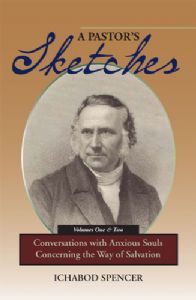
Spencer thinks we should be suspicious of someone’s coming to Christ in the midst of strong affections, for “when the affections take the lead, they will be very apt to monopolize the whole soul—judgment and conscience will be overpowered, or flung into the background” (175). He calls this kind of phenomenon “fanaticism” (175). Spencer believes that “the most clear perception of truth, the deepest conviction, is seldom accompanied by any great excitement of the sensibilities” (175). 9) It does not seem to be a good idea to Spencer, to present the doctrine of predestination at the outset to a sinner who still needs to learn repentance and faith (239).
Spencer here more than anywhere else demonstrates that he is out of touch with biblical spirituality. This brief post is not the place for a lengthy discussion of emotions and their role in the Christian life (I do a little of that here), but I will mention a few things in passing.
Part of conversion is the work of the Holy Spirit that causes the sinner to not only know they are sinful, but to feel contrition for their sin. This feeling I believe to be necessary for true conversion. When someone comes to Christ, it is not merely because they have understood doctrines, but it is because the Holy Spirit has wrought within them genuine affections for the person of Christ. They ought to be overwhelmed with affection for the Savior, having seen Him for who He truly is for the first time. How can such a vision not be attended with great excitement of the spirit of a man? Also, joy is an essential aspect in conversion (Matthew 13:44). Thus, we should expect strong affections to arise during conversion, and for the conversion of sinners to be accompanied by a “great excitement of the sensibilities.” Conversion affects the whole person, not just the mind. In fact, Spencer seems to be unconsciously aware of this reality, as he tells us he considers it part of his responsibility to impress truths, not merely on the mind, but on the “feelings” (52).
s i m p l e • g o s p e l ::: N.T. Wright & Martin Luther’s Gospel
Shot out to Nick Mitchell for showing us that N.T. Wright and Martin Luther both agree on the basic message of the gospel. How can this be? Because the core message of the gospel is simple, and does not involve (in either’s definition) the doctrine of justification.
Now that’s good news.
——————————–HT: Kingdom People———————————-
 T h e o • p h i l o g u e